Category Archives: DIY

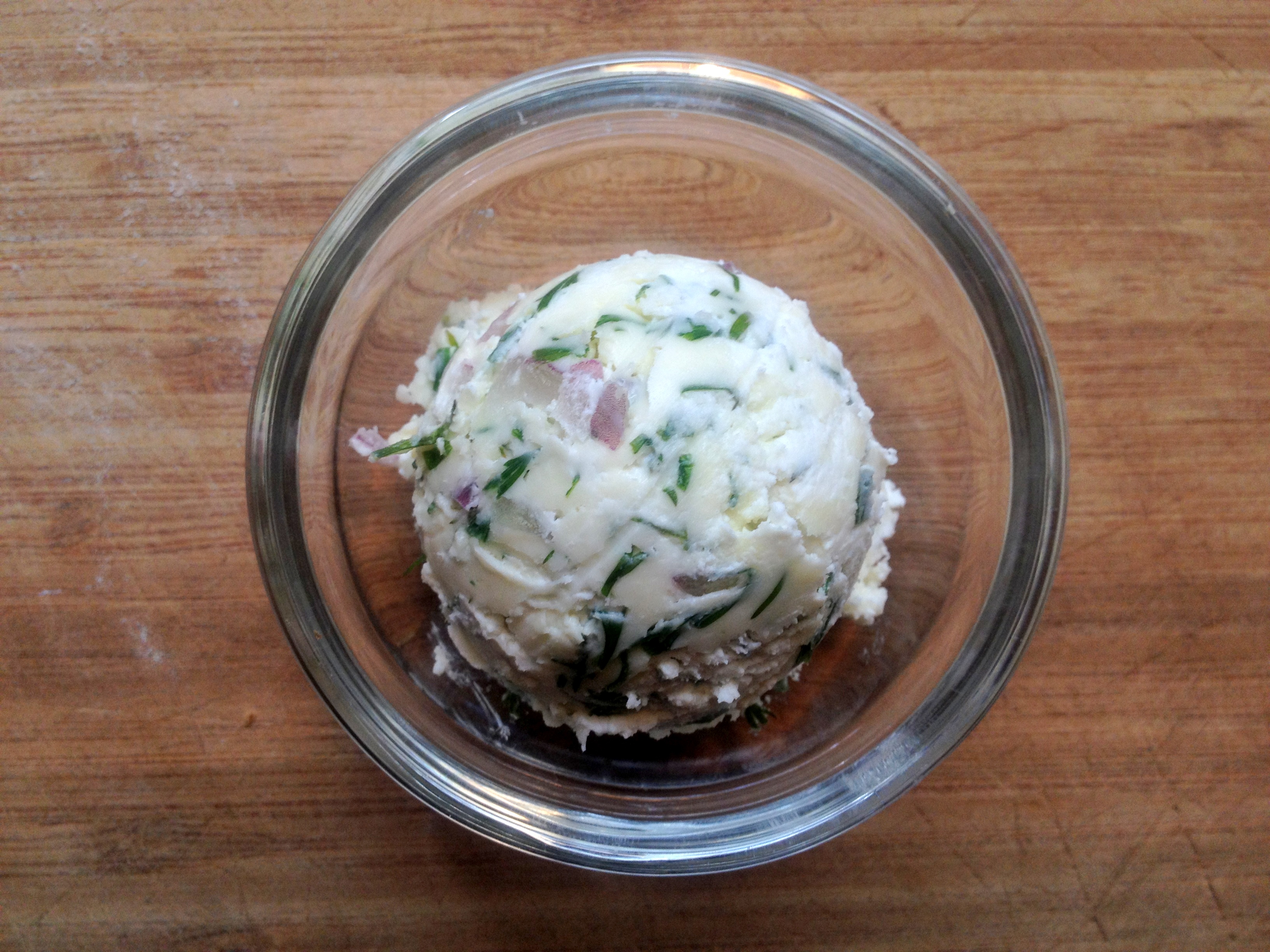
Herbed Goat Cheese and Butter Spread with Dill, Chives, and Shallots

I wrote yesterday about how a homemade bread can jazz up any other humble dishes to make a meal.  Well, whether or not you made your bread from scratch, I hope you have some handy.  Because you’re going to be wanting some as an excuse to eat this spread.

Heidi Swanson describes it as “Dill Butter” in her Super Natural Every Day cookbook, but I like to increase the ratio of goat cheese to butter to play up the tangy creaminess (and so that I feel like I can spread it a little more thickly).  This recipe makes a good amount, and although you’ll be happy to have it in the fridge all week long, you might want to halve it if you’re not making it for a party.

You can also play around with the herbs, of course.  As made, the dill flavor predominates deliciously, but a wander through the garden might inspire you to take this combination in a different but equally alluring direction.

Continue reading Herbed Goat Cheese and Butter Spread with Dill, Chives, and Shallots (click for recipe)

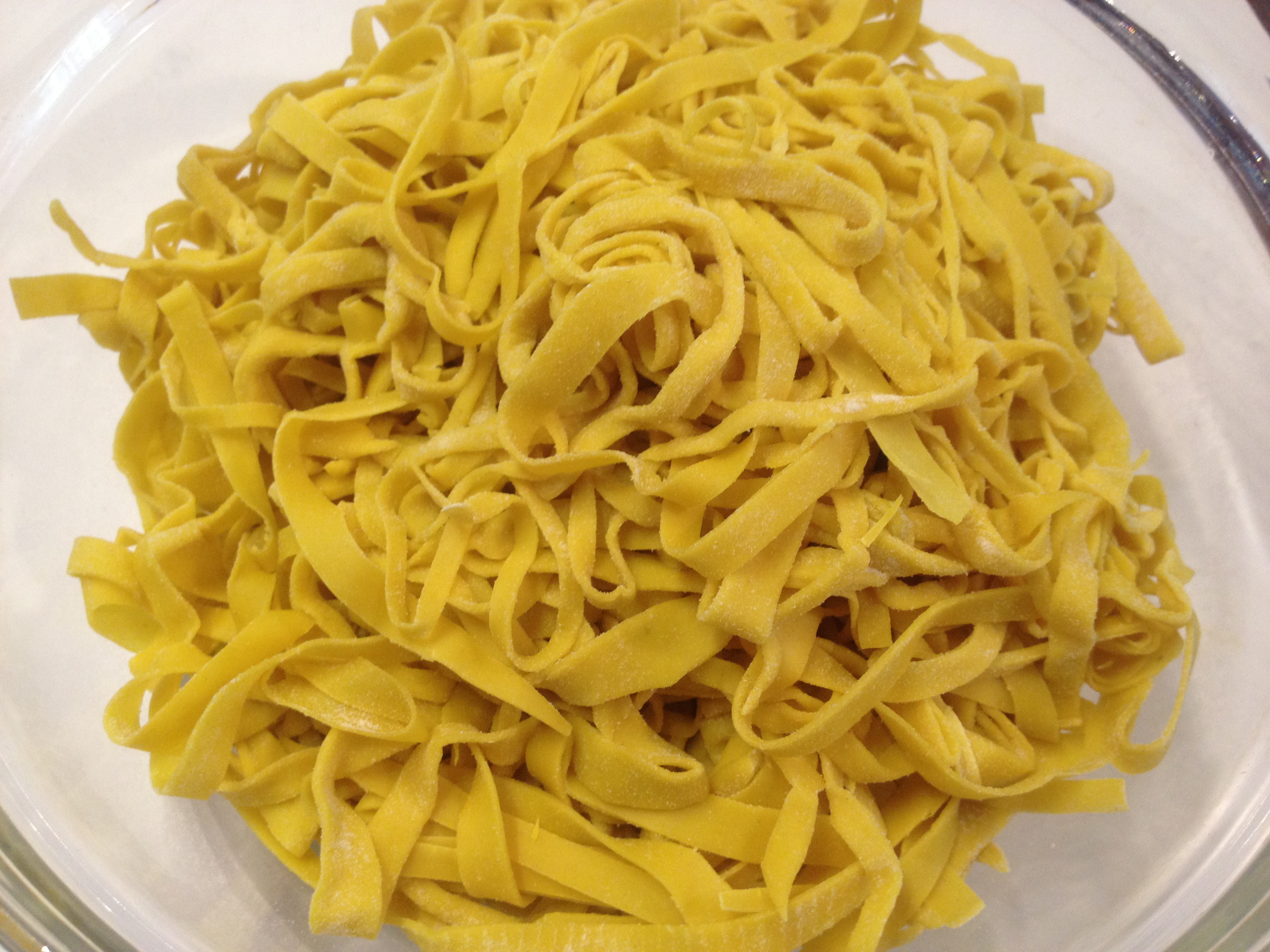
Homemade Vegan Pasta

It turns out that it’s no big deal to make homemade vegan pasta.  No eggs?  No problem.  You can apparently even make pasta with just flour and water alone, but I fancied things up with a splash of olive oil to replace the richness of the eggs and a spoonful of turmeric for color.

I made these noodles to serve in my zippy noodle curry, but they would certainly stand up well to other sauces.  They are a bit less sturdy than the egg noodles, so I would advise letting them dry out for a little while before you cook them so they don’t end up mushy.  We draped towels over all the kitchen cabinets and hung noodles everywhere while I was cooking dinner, and that seemed like plenty of drying time.

You can vary this recipe, of course, to change the flavor or color of the pasta.  I’m thinking of making pink pasta by adding some of my beet powder, and of course we love spinach pasta (you can blend the 2 c. spinach as I did in that recipe with your liquid ingredients, reducing the water in the recipe below by about 3 Tbsp.). Continue reading Homemade Vegan Pasta (click for recipe)

Leek and Mushroom Pizza with Blue Cheese

I can never resist the cheese counter at my local co-op.  It has a small selection of cheeses, but they’re meticulously curated by a cheese enthusiast whose palate seems in tune with my own, and I always love everything he recommends.  Last time I was in the store I browsed by myself, however.  I know I probably should have chosen a cheese based on the type of milk used, or the region from which it hailed, but I will admit to having used one criterion only to select this cheese: its name.

Oregonzola.  Isn’t that cute?  See how they did that?  A blue cheese, a local spin, a clever pun, and I’m sold.  And it was quite nice, I must say.

It’s the weekend, so make your pizza crust today (recipe here) to have it handy in the fridge for a speedy weeknight dinner.

Continue reading Leek and Mushroom Pizza with Blue Cheese (click for recipe)

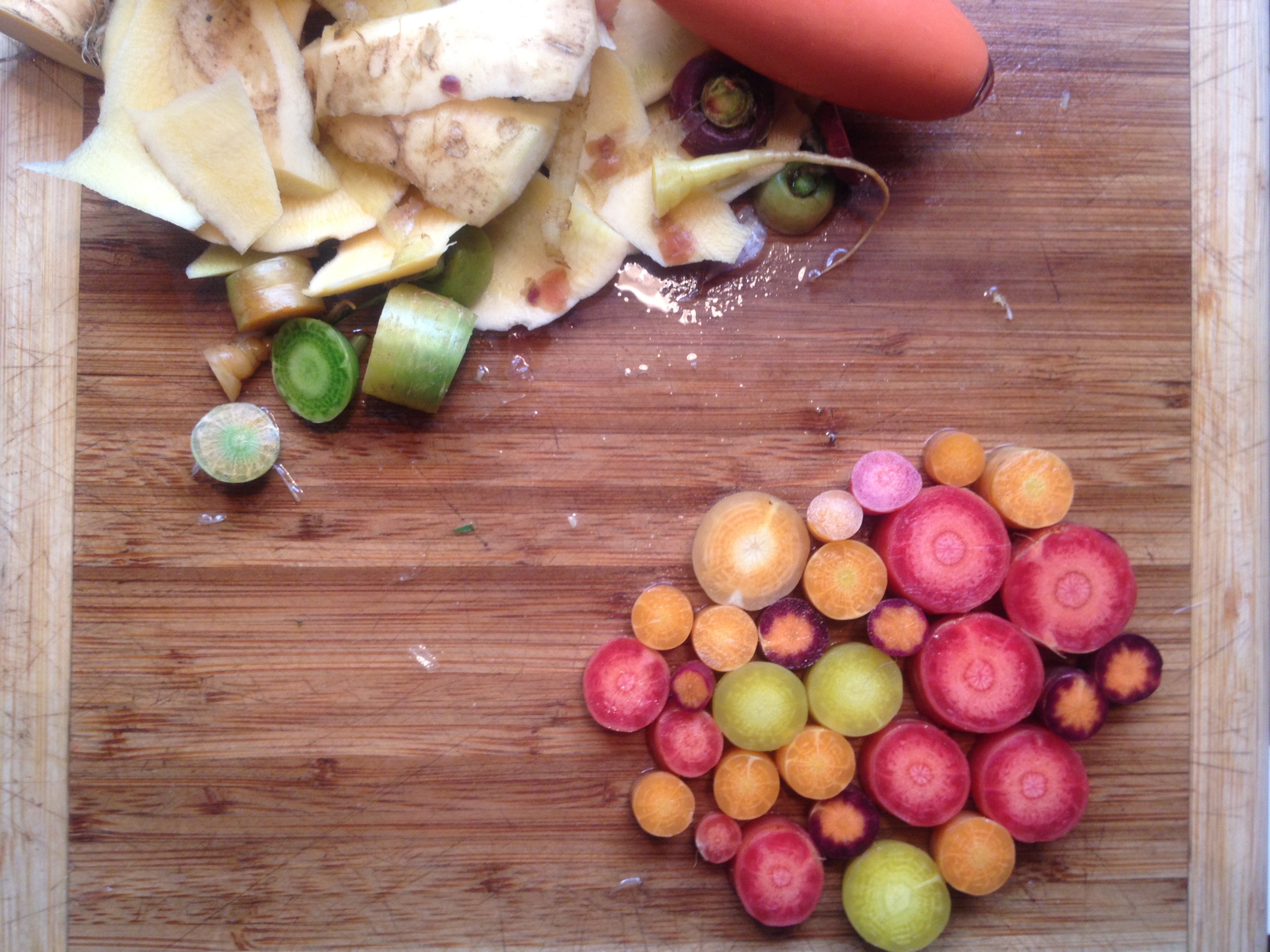
How to Make Homemade Organic Vegetable Broth for Free

Well, almost free.

I like to make my own broth for many reasons.  It tastes better, I can choose how to salt it, it’s environmentally friendly, and it doesn’t sit on a shelf in plastic for an indeterminate amount of time before it arrives in my soup pot.  But, let me be honest, the biggest reason I make my own broth (or stock, maybe, if you want to get technical) is that it’s irresistibly cheap.

Buying mostly organic produce is good for the environment and, I believe, for my family’s health.  But the price tag still rankles a bit, especially here in Seattle where the only things that appear to grow effortlessly are rosemary and moss.  Making my own broth allows me to essentially use my vegetables twice: I eat the trimmed part the first time around, and save the peelings for the stock pot.  At $3.50 a quart, I’m saving over twenty dollars every time I make my own broth.  If I do it once a month, the savings really add up over the course of a year.  Of course, you might not eat as much soup as we do…but still.  It makes me feel better about how much I pay for organic produce.

[UPDATE: Many of the comments below mention composting veggie scraps or feeding them to the chickens.  This, of course, is their third and final use after you have boiled them for stock!]

The basic method is to chop your selected organic vegetable trimmings into 1-2” pieces and save them in a bag in your freezer.  (I wouldn’t do this with non-organic vegetables, because I’d be concerned about concentrating the pesticides that are in the peels.  This is my completely unscientific personal opinion.)  Add to the bag over time.  When it’s full, put everything in a pot, cover it with water, add some seasonings, and simmer for 30-45 minutes.  Add salt until it tastes like something you’d like to drink by the mug.  Strain and use your broth, or freeze it for later use.  Get a new freezer bag of trimmings started and repeat.

The only mental effort required is the contemplation of whether the trimmings you have before you will taste good in your broth.  Some are easy: Carrots? Yes.  Broccoli rabe?  Probably not.  Turnips?  Trick question!  They’re great.

You want to aim for a balance of flavors in your stock pot.  For me, the essentials are onion, celery, and carrots (or another sweet vegetable, like winter squash).  If I don’t have some of each in my frozen mix, I will sacrifice a whole onion or a few stalks of celery to balance out the flavors.  Beyond, that, though, the sky’s the limit.  I have tried to list some of my favorites (and a few un-favorites) below, but if you want an opinion from me and/or your fellow readers about whether a particular vegetable would be good in a broth, please just ask in the comments.

One more note: this process has the added benefit of giving you seasonally-flavored broths.  The vegetables I’m cooking this month are going into the freezer, and what goes into the freezer ends up in the stock, which means that my stocks reflect current seasonal flavors.  Perfect, because my soups usually do as well.  It’s a beautiful cycle.  When cooking in the summer, I usually do want a light broth with corn and tomato flavors, and in winter I am glad to have a rich one full of mushrooms, root vegetables, and winter squash.

Continue reading How to Make Homemade Organic Vegetable Broth for Free (click for recipe)

A Delicious Cracker: Homemade Matzo with Olive Oil

Tonight is the first night of Passover, so we are baking matzo (matzoh? matzah! I can never decide which spelling to use) this morning instead of challah (hallah!).  Inspired by a sweet post on Gourmandistan, I took their advice and didn’t use their recipe, instead opting for one that Mark Bittman published in the NY Times a couple years ago.  Already untraditional in its use of olive oil and salt, I took the glad-not-to-be-actually-fleeing-Egypt spirit one step further and sprinkled the tops of some with the outstanding fennel and nigella salt from SugarPill and others with a dukkah blend from World Spice.

The result? Truly delicious crackers.

The recipe admonishes you to roll the dough paper-thin.  And when you say paper-thin, I say pasta roller.  That did actually work quite well, but I will also share that the much thicker rounds that my three-year-old rolled out by herself were equally delicious and only marginally less crispy.  So this is not a fussy dough.  Enjoy yourself.  And once you try these, you may decide to make them a year-round staple.  I am already thinking of the dips I want to serve these with after Passover is over and I can avoid the spelling conundrum by simply calling them “flatbreads.” Continue reading Homemade Matzo with Olive Oil (click for recipe)

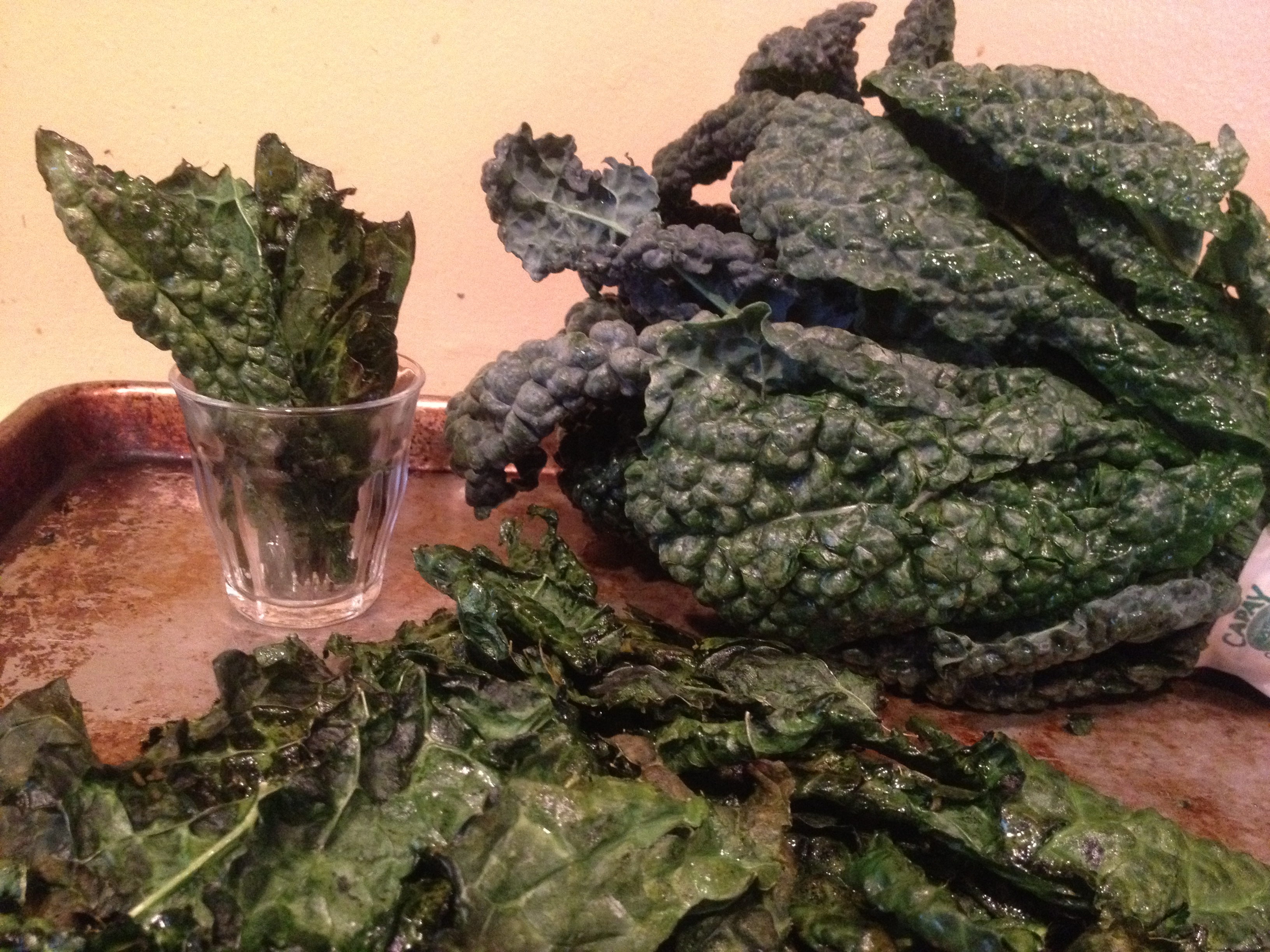
Kale Chips

Are kale chips so 2009?  I used to be in the kale chip vanguard, an evangelist for their crispy crunch and umami allure.  I sang their praises, shared the recipe (such as it is) with anyone who’d listen, made batch after batch.  But suddenly I keep hearing that kale chips have become as passé as the combination of sun-dried tomatoes and asparagus.  It is with great regret that I will have to give them up to keep abreast of current food trends….

Not really.  I don’t even really know what the current food trends are.  So, friends, two questions.  One, what are the current food trends?   And two, what do you put on your kale chips?

I have heard of all kinds of fabulous-sounding additions that could take your kale chip experience in many possible directions: sesame seeds, Parmesan, smoked paprika, cayenne, garlic powder, you get the idea.  But I usually just go with olive oil and salt.  I hesitate to call this a recipe because you can really do anything you want here as long as you dry out some kale in the oven until it’s crisp without burning it.  Any kind of kale.  I’ve made these chips with lacinato kale (pictured), green and purple curly kale, Red Russian–all great.  Wash and dry a bunch of kale and tear it into small or large pieces.  Rub with a little olive oil and salt and additional seasonings if desired.  Spread leaves in a single layer on two cookie sheets.  A relatively foolproof method is to bake the chips at 250 for 30-35 minutes, switching the top and bottom pans halfway through and watching closely near the end of the cooking time.  (Thanks, Bon Appetit in 2009!) Remove chips as they crisp and return the rest to the oven to finish cooking.

But IF you can’t wait half an hour for this magic, and IF you’re feeling daring and eagle-eyed, you can roast these chips at a much higher temperature (say, 450).  It goes without saying that they will cook, and burn, more quickly at a higher temperature.  On the other hand, they’ll be ready more quickly for you to gobble up like they’re going out of style.

Sweet Potato Chips

I occasionally see sensational headlines about how you can make potato chips in your microwave.  That is bunkum, I say.  I tried it out, just to be sure, and the results were as ridiculous as I expected.  I got cardboardy, chewy potato slices with some occasional hard spots.  My kids did eat them (I mean, I called them “chips,” so what’s not to like?), but they weren’t good.  And they took a while to make, what with having to check and remove “crisp” specimens then re-microwave the rest.  Luckily you can only make a plate at a time, so the damage was limited to half a potato.

You want chips without a deep fryer?  THIS is the recipe for you.  We do this with regular potato slices as well (I keep promising that potato chip pizza recipe), but for eating on their own these sweet potato chips are the best.  They crisp up right through, you can make two big trays at a time in the oven, and they are a sweet and salty side or snack.  Crunch, crunch, crunch. Continue reading Sweet Potato Chips (click for recipe)

Rhubarb and Brown Sugar Jam

There are harbingers of spring in the garden.  Eggs and herbs.  Flowers and spots of sunshine.  I’d like to say that this rhubarb jam is a celebration of my first harvest of the year, but it’s not.The rhubarb still has a ways to grow.  Instead, this jam celebrates a more mundane annual ritual: cleaning out the freezer.  While fruit picked at the peak of ripeness and made instantly into jam preserves some of the flavor of summer, frozen fruits (or vegetables, in rhubarb’s case) are a perfectly acceptable alternative.  And when it all gets to be too much for us in the summertime–all the plums ripen at the same instant I find myself unable to resist a box of peaches at the market and my brother offers to bring a haul of rhubarb to town–well, into the freezer it goes.  And at this time of year, when our kids have eaten through our obviously-inadequate annual supply of jam, we’re glad to have summer’s bounty patiently waiting for us to deal with it.

In the past few days, we’ve made peach, yellow plum, Italian plum, plum-ginger, and this rhubarb jam.  We canned most of it, froze some, and experimented with making a sticky jam tart.  And hopefully these 35 jars will hold us over until summer comes again.

The Rhubarb Brown Sugar Jam is simple but seductive.  Sweet, bracing, tonic.  And maybe, where you are, you can already pick a few stalks of rhubarb or find it at your local market.  The recipe is infinitely scalable.  You can make one jar to spoon over toast (think of it with this bread!) or a big batch to freeze or can.  Or do as my 5 year old did and just enjoy a bowl of it with a spoon.  (I probably would have added some yogurt to the bowl myself, but hey.)

Continue reading Rhubarb and Brown Sugar Jam (click for recipe)

How to Cook White Beans

Having already discussed the many reasons to cook your own dried beans (they’re tasty, healthy, and inexpensive) and how easy it is, I won’t go into that again here.  What I will say is this: although you can further embellish these beans or use them in other recipes, these basic white beans are so good that I also like to just serve them with a spoon.  They are gently aromatic, tender, wholesome, and delicious.

You can cook any white beans following this recipe. Cannellini beans, flageolets, Great Northerns, navy beans, even chickpeas.  Larger beans will take longer to cook, that’s all. Continue reading How to Cook White Beans (click for recipe)

Easy Beer Bread with Sweet and Savory Variations

I don’t want to get too personal here, but I have something to admit: if I had to pick only beer or wine to drink for the rest of my life, I think I’d pick beer.  So beer bread appeals to me for its flavor and slight bitterness–prominent at first, but barely there once it’s toasted and slathered in butter and honey–as well as for the seasonal fact that you may find yourself with a stray can of Guinness in the back of your fridge after St. Patrick’s Day is gone.  And a stout makes a very nice beer bread, especially with a few embellishments that we’ll discuss below.

I first learned of beer bread from a fellow preschool mom, who said she made it all the time with her kids by mixing 3 ingredients right in the bread pan before popping it in the oven (3 c. self-rising flour, 1/4 c. sugar, 12 oz. beer, in case you’re wondering–but it’s still only 5 ingredients if you add the baking powder and salt to the flour by yourself).  So you see why that appealed to me–one minute to make the bread plus 45 to bake it means you go from the idea to the reality of of a crusty, piping-hot homemade loaf in 46 minutes.  Genius.I’ve made a few refinements since then, like mixing the batter in a separate bowl because it’s easier to incorporate all the flour.  And I’ve experimented with different beers (each lends its own flavor, so keep that in mind; an IPA is pretty hoppy while a wheat beer, lager or stout can be milder).  And I wouldn’t feed a whole loaf to the preschool set, because contrary to popular belief, the USDA says that alcohol doesn’t evaporate entirely when cooked or baked.

One of the beautiful things about baking your own bread is that you can add any savory or sweet flavors you like.  Herbs, onions, garlic, cheese.  Orange zest, honey, dried fruit, chocolate.  Of the five loaves I made this week, my two favorites were both made with stout beer.  One was savory, with sharp cheddar cheese and dill.  The other was sweet, with chocolate chunks and vanilla.  These variations are included below, but feel free to tinker with the basic recipe to your heart’s content.

Continue reading Easy Beer Bread with Sweet and Savory Variations (click for recipe)