Category Archives: Vegan or Would-Be-Just-As-Good-Vegan

Simple Brown Rice Sushi Bowl

There is an extensive list of finicky cooking tasks that J & I don’t do anymore.  Making sushi for a crowd is on that list.  Love the flavors, hate the time it takes to assemble and slice 20 rolls.  This is an easy way out, and can easily be scaled to feed many or a few.

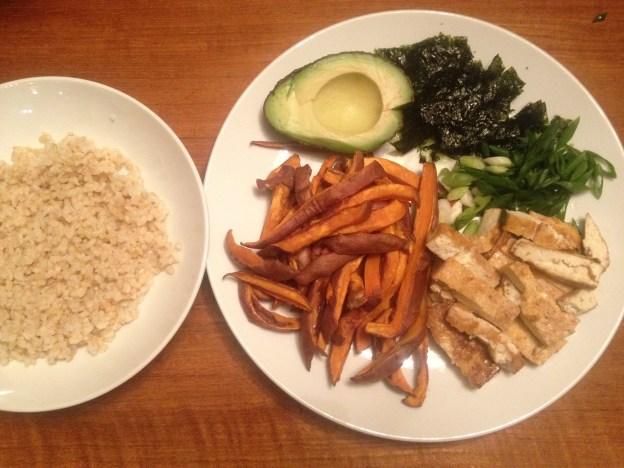
To make this Simple Brown Rice Sushi Bowl spread, start by making a pot of cheaters’ sushi rice.  Bring to a boil one part short-grain brown rice in two parts water with 1/2 tsp. salt per cup of rice, then lower the pot to a simmer for 40 minutes.  Remove from heat and leave covered for 5 minutes (I put a clean dishtowel under the lid to absorb some moisture), then fluff with a fork and stir in seasoned rice vinegar and additional salt to taste.  Set rice aside.  Meanwhile, prepare your toppings: roast a pan of sweet potato batons (for about 30 minutes at 450, stirring a few times), pan-fry some tofu (I season mine with equal parts soy sauce and fish sauce plus a pinch of sugar), and slice up some green onions, nori strips, and avocado.  Other possible toppings could include edamame, mushrooms or spinach sauteed in sesame oil, a thinly-sliced egg pancake, raw fish–whatever floats your sushi boat.  Serve rice and toppings separately and let everyone assemble their own bowls.  Garnish with toasted sesame seeds.

Jewel Tone Winter Pasta

I have mentioned before that orange vegetables have favored status with the children in our household.  Which is why, when I have a butternut squash around, my first thought about dinner is usually that I should dice it up and roast it.  My oldest calls the carmelized bites “squash candy,” which isn’t at all wrong (although I don’t go this far).

I, however, am not picky about the color of my food, so long as my plate contains an array of stunning hues.  Ok, so I am picky.  It’s worth it.  Beautiful tastes better.

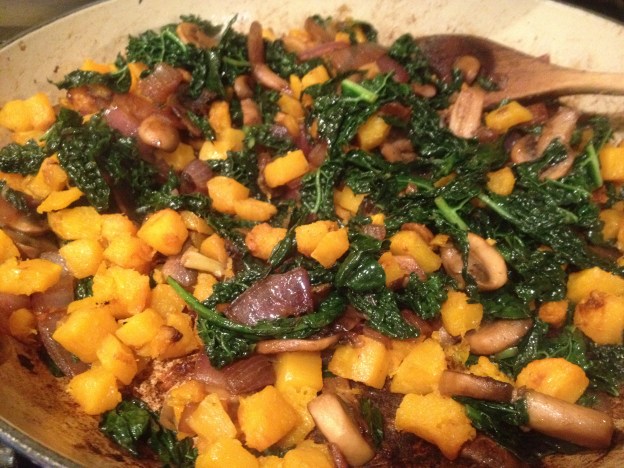
Luckily, we eat a lot of vegetables, and vegetables are gorgeous.  This pasta has a combination of veggies that I love for their jewel tones almost as much as I love them for their flavor together: butternut squash, kale, red onion, and mushrooms.

I am not an evangelist on this point, but I think this combination is worth trying with whole wheat pasta.  At this time of year especially, I like the robust savor of whole wheat noodles underlying the sweetness of caramelized winter vegetables.  But hey, if that’s not your thing, go ahead and use whatever you’ve got on your shelf.

Jewel Tone Winter Pasta begins with the roasting of a peeled, diced butternut squash tossed with a spoonful of olive oil and a few good pinches of salt.  Roast it at 450 and stir every 10 minutes or so until the cubes start to candy at the edges (about 40 minutes for 1/2″ cubes).  Meanwhile, heat a pot of water to boil pasta.  While it’s heating, find a pan large enough to hold the finished dish and saute a sliced red onion in olive oil on high heat with a pinch of salt until it begins to really brown.  Add a pile of sliced mushrooms and continue cooking until the liquid evaporates and they shine like gold.  Now toss in a big pinch of salt and a shredded head of washed kale, with a few additional spoonfuls of water if necessary to deglaze the pan, and cook until the kale is tender but not mushy.  (Take the pan off the heat if your pasta and squash aren’t ready yet.)  When your squash is nearing perfection, cook whole wheat spaghetti (or your noodles of choice) in salted water for 1 minute less than usual and then drain, reserving a cup of cooking water–the pasta will finish cooking in your pan.  Put your pan back on the heat and combine everything: sauteed veggies, roasted squash, noodles, a splash of olive oil and some good grindings of pepper.  Taste for salt and serve with more pepper at the table, and a little bit of cheese if you’re so inclined.  I love this dish with blue cheese, but fresh goat cheese or grated parmesan would be perfectly acceptable alternatives.

We served this pasta with a spinach salad with fresh pears, dried cherries, sunflower seeds and Creamy Pear Vinaigrette, but it would also be delicious with this lemony Romaine salad with homemade croutons.

Everyone’s Doing It: Sweet, Salty, Savory Olive Oil Granola

I have been reading Melissa Clark recipes as my bedtime stories this past month, and I was intrigued by a recipe she described for a granola made with olive oil.  Sweetness from brown sugar, earthy undertones from the olive oil, you understand why I bookmarked the page.  But you know that thing that happens sometimes, where you never heard of something and then once you learn about it you see it EVERYWHERE?  Turns out, suddenly there are variations on this recipe for olive oil granola all over the interwebs.

And tonight I learned why.  Because it’s good.  So good I could hardly stop stealing pinches off the tray–and that was before it was baked.  You might want to make it this weekend–if you can wait that long.

Of all the nearly-identical recipes, I started with this one, which was pretty much pared down to the essentials already, but I simplified it one step further by eliminating the coconut, which is not my thing.  If it’s yours, add a cup of coconut flakes to the recipe below.  Like most granola recipes, you can vary the nuts and seeds and/or add fruit to suit your taste.

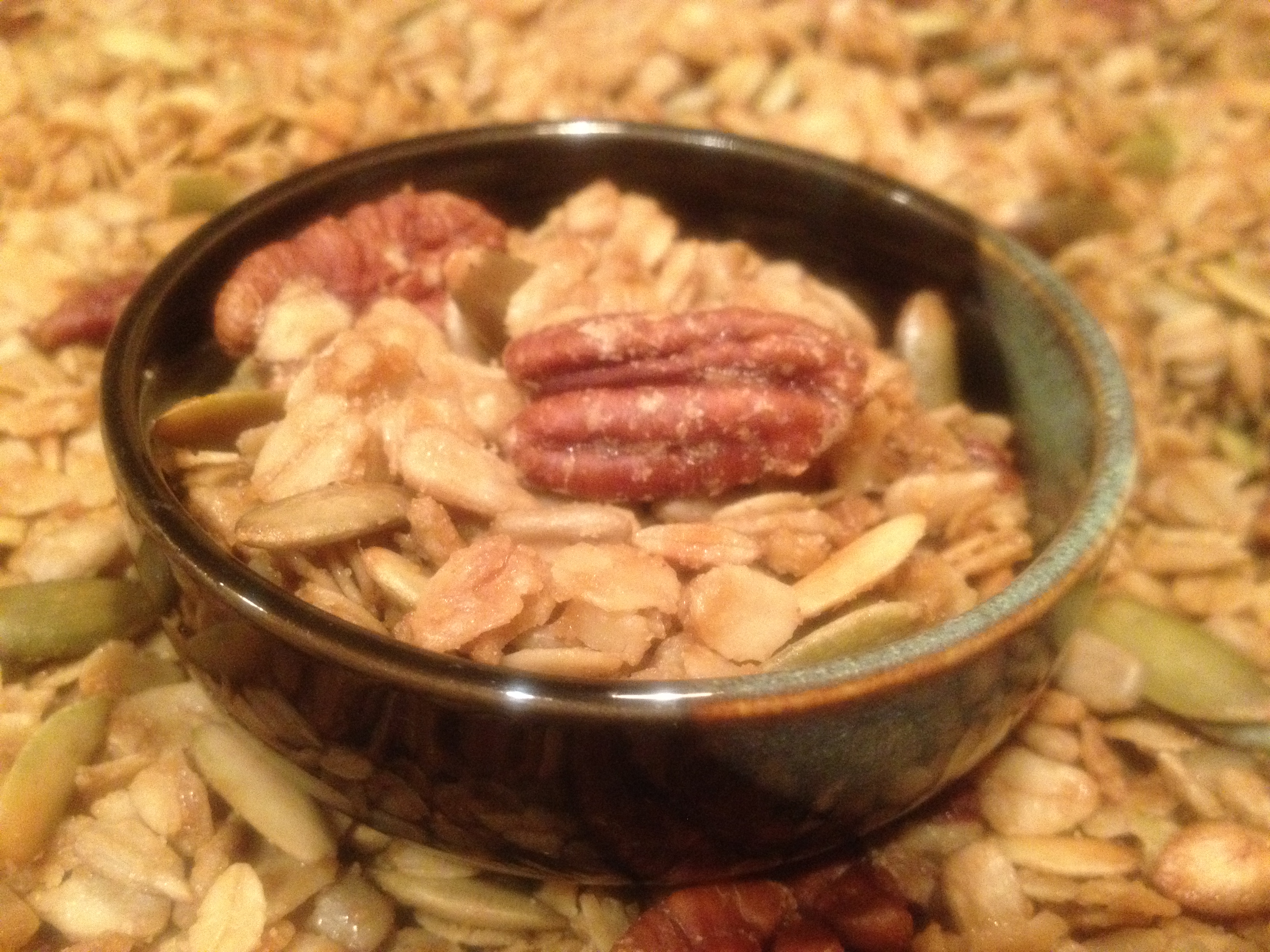
Preheat your oven to 300 while you get a big bowl and mix 3 1/2 c. oats with 1 c. each of raw pumpkin seeds and raw sunflower seeds and 1 1/2 c. whole pecans.  Pour over 1/2 c. brown sugar, 1/2 c. olive oil, 3/4 c. maple syrup and 1 tsp. kosher salt and mix well.  Divide between two sheet pans and bake until nice and toasty, about 30 mins., switching the pans and stirring well every 10 minutes.  Let cool completely before storing in an airtight jar.

Eat by the handful from said jar.  Or, if you want to get fancy, you could put your handful of granola in a little bowl first.


p.s. As you may have guessed, this granola is not exactly health food.  If you’re looking for an everyday recipe with a lower proportion of sweetener and fat, you might like this Almond and Dried Cherry Granola recipe.

Quick Thai Green Curry

I understand that there are cooks who plan out menus and then peacefully prep their ingredients in advance.  Come dinnertime, these lucky souls simply slip a dish into the oven and then casually toss a salad with one hand while sipping an aperitif with the other during the few moments it takes the meal to finish cooking to perfection.

I don’t cook like that.

(Come to think of it, I don’t live like that.  Perhaps the two are related.)

Instead, as dinnertime approaches at my house, my first order of business is to plonk the baby in her high chair so she can’t eat all the crayons while my back is turned.  Then I have a few great ideas in rapid succession and discover that I’m out of one key ingredient for each.  Then I draw some half-hearts on folded paper for the big girls to cut into Valentines and opine as to whether now is a good time to start a watercolor painting project on the dining room table, which is already almost buried in tiny scraps of paper, glitter, and stickers.  Then I wonder what to make for dinner. (Remember how I said I was going to plan more?  Still working on that.  But I have been cooking more lately, as you’ve seen!)

Finally, I consider how much more time I have before I want dinner on the table.  If I have an hour, maybe I’ll start a pizza crust and start roasting some potatoes.  If I have two, I might start a soup with long-cooking legumes.  But if I want dinner on the table in 20 minutes, I might make this quick curry.

If YOU want to have dinner on the table in 20 minutes, go put on a pot of jasmine rice and then check back with me.  Ready?  Ok.  It’s a Thai green curry, and I made mine with a thin filet of cod that went straight from the freezer into a bowl of hot water to defrost in minutes (don’t worry, Harold McGee says it’s ok).  You could go the fish route too, or you could use shrimp or chicken or tofu.

Sauté a thinly-sliced onion until it starts to soften, then add 2-4 tsp. green curry paste and sauté for a moment to release the fragrance.  Pour in a can of coconut milk and add 1 Tbsp. each of fish sauce, brown sugar, and lime juice.  Bring to a simmer, then add a pound of white fish in 1” chunks (I used cod; you could also use shrimp, chicken, or tofu) and sliced veggies (I used a green pepper, a stalk of celery and a small zucchini).  Simmer, stirring occasionally, about five minutes or until the fish is cooked.  Toss in a big handful of cilantro and chopped tomatoes for the final minute, then give it another squeeze of lime and adjust the flavors to taste with more lime, brown sugar and fish sauce.  Serve over hot jasmine rice.

p.s. This Noodle Curry with Tofu, Sweet Potatoes and Chard is pretty quick too, and also delicious.

Creamy Pear Vinaigrette

At this time of year, there are often two things happening in my kitchen.  First, I am eating a lot of salads made from crunchy winter vegetables, because, well–even here in temperate Seattle–I know that tender lettuce is out of season in the dead of winter.  And I am starting to crave a salad that speaks of springtime, full of lettuce’s delicate crunch.  The second thing that is often happening in my kitchen right about now is that a pear is lingering in the fruit bowl that is five minutes too ripe to be considered absolutely perfect.  When these two events coincide–which, as I said, they often do at this time of year–I take it as an omen and make this salad dressing.

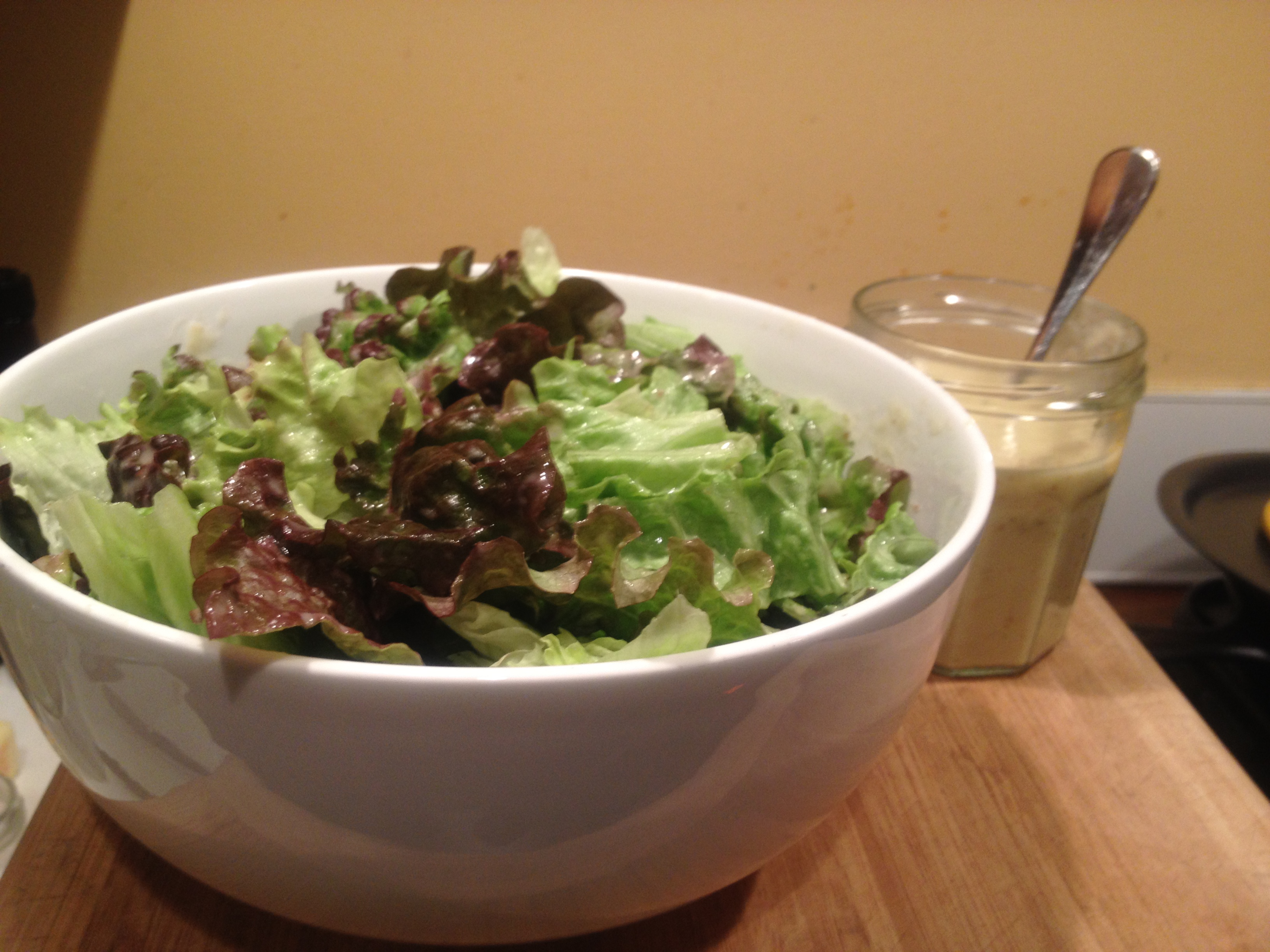
This Pear Vinaigrette is creamy, sweet, and lower in fat than more traditional vinaigrette dressings.  Tonight I just tossed it with lettuce for a very simple green salad, but you can also use it to doll up a fancier salad by including nuts, fresh or dried fruits, cheeses, you name it.  In your blender, just whizz a chopped super-ripe pear, 1/3 c. olive oil, 2 Tbsp. apple cider vinegar, 2 Tbsp. apple juice (or water), 1 tsp. dijon, 1 tsp. fresh thyme leaves, a few grinds of pepper and 1/4 tsp. salt.  A very-ripe pear makes this dressing plenty sweet for me, but you can also sweeten it to taste with maple syrup.  (I haven’t tried this, but the gorgeous vegan blog v:gourmet recommends it.  Although I only met her–I mean her website–moments ago, I trust the writer implicitly because we have almost the exact same favorite cookbooks.)

Speaking of cookbooks, this recipe is from Moosewood Restaurant’s Cooking for Health.  Of the many recipes I tried in that book when I first got it, I think this is the only one that stuck in my regular rotation.  It probably says a lot about my expansive cookbook collection when I keep a cookbook for just one recipe.  Although now that I’ve jotted the recipe down here, maybe I will move it along to make room for a new cookbook.

If you were making room on your shelf for just one great new recipe collection, which would it be?

White Winter Dinner: Cauliflower Soup and Pizza Bianca

The children in my house–those who are old enough to exercise free will, anyway–have developed a color-based hierarchy to determine the acceptability of vegetables.   Orange: yes! Green: probably not!  Yellow: yes!  Red: no way unless it’s pizza sauce! Or something like that.  It’s hard to keep track.  I thought this was ridiculous until I stopped and considered my own palate’s prejudices, which usually demand a variety of colors to find a meal delicious.

Digging through the fridge for tonight’s dinner, though, a single-hued meal started to take shape in my mind.  Maybe all the white, white snow was getting to me.  Cauliflower soup.  A a pale celery salad.  A garlicky white pizza.  I was going to do it.  I got right up to the point of piling on pizza toppings when my resolve failed me and I had to saute a pile of chard and spinach (what is a meal without green?!) and then, having already jumped off the white-meal rails, I crumbled a chunk of smoked salmon over the half the pizza as well and breathed a sigh of relief.  A little color makes the meal, I say.
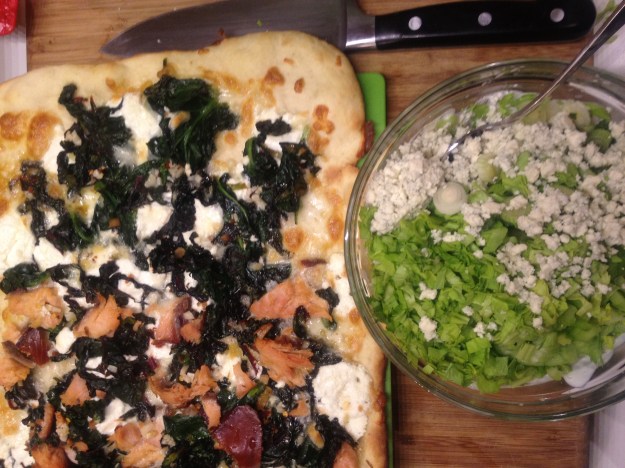
First, the creamy, delicate, 5-ingredient (counting water and salt!) Cauliflower Soup: Sweat half a thinly-sliced onion in 3 Tb. olive oil for 15 mins without letting it brown, then add a broken-up head of cauliflower, a tsp. of salt and 1/2 c. water.  Cover and cook 15 mins, then uncover, add 4 1/2 c. hot water, more salt to taste, and simmer uncovered 20 mins.  Puree and let stand 20 mins. to thicken; add 1/2 c. or more additional water to thin the soup if desired as you reheat it, season to taste with more salt, and garnish each bowl with cracked pepper and/or a swirl of olive oil.  The recipe is from Food52, a website that I find myself increasingly enjoying.  Is this where all the Gourmet Magazine readers have gone?

While the soup is simmering, make a Spicy Garlic Oil by mixing 2 Tbsp. olive oil with a big minced clove of garlic and 1/4 tsp. red pepper flakes.

Then get your pizza crust started.  Our go-to recipe is from Annie Summerville’s Fields of Greens and makes way more than you need for one pizza, so halve these amounts if you don’t want a pizza crust to use later in the week (you can also freeze it).  Or, hey, use your favorite recipe or a purchased crust.  If you’re doing as I did, whisk 1 Tbsp. yeast into 3/4 c. warm water and set aside.  In the bowl of your KitchenAid, combine 3/4 c. milk, 1/4 c. olive oil, 1 tsp. salt, and a couple Tbsps. each rye flour and fine cornmeal (if you have either handy) for texture.  Stir in your now-foamy yeast mixture then put in the dough hook and incorporate 3 1/2 c. flour (you can use some whole wheat, if you like; we like to use at least part Italian 00 flour for the incredible texture it gives the dough).  Anyhoo, let your machine knead it into a nice ball (add more flour if it is too sticky), then oil the bowl, roll your dough ball around in it, and let it rest covered while you get your toppings ready.

Preheat your oven as hot as it goes, and put your pizza stone in if you have one.  For the Pizza Bianca you can roll the dough nice and thin because your first layer is cheese rather than sauce, which will protect the dough from getting soggy.  So roll or stretch out a nice big thin crust onto a piece of parchment paper, which will make moving it easier later, and layer on shredded mozzarella, chunks of goat cheese, some winter greens sauteed with garlic until fairly dry, and some hot-smoked salmon if you are inclined that way.  Then brush the crust of the pizza with some of the spicy garlic oil (this great tip came from a recipe on Epicurious, although I had made a very similar pizza many times before) and scoop most of the rest of it over the pizza.  Slide pizza, parchment paper and all, onto a pan or straight onto your pizza stone and bake until the bottom is crisp, about 7-9 minutes if the crust is thin. When it comes out of the oven, brush the crust again with the remaining garlic oil.

Serve the soup and pizza with a crisp salad; ours tonight was celery and blue cheese but I think this meal would also be great with another of my favorite winter salads: just celery, a fennel bulb and/or a sweet pepper, and an apple, all sliced paper thin, with the juice from the apple as the only dressing.

Winter Vegetarian Chili

The chili purists bicker about beans, no beans, veggies, no veggies, whatever.  This recipe is not for them.  They’d flip out over this one. It’s smoky, meaty, tomato-y, all the things a good chili should be–but it’s vegetarian.

This is a secret, shh, but this chili has wheat berries* in it.  I know, it’s crazy.  But they’re great.  They are combined with black beans to give the chili texture and rib-sticking density, while the flavor is anchored by chipotles and cumin and elevated by lime and cilantro at the end.  This is my go-to winter chili.

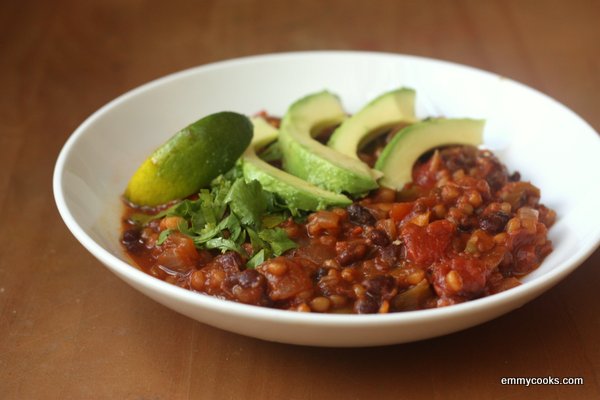
To make this Winter Vegetarian Chili, start by cooking about a cup of wheat berries in water to cover by an inch and a teaspoon of salt.  (Cooked wheat berries freeze well, though, so why not make more while you’re at it?)  Bring them to a boil and simmer for about an hour, until pleasantly chewy.  Meanwhile, get your chili going: saute a chopped onion with a chopped red pepper for a few minutes, then add 5 minced cloves of garlic, 1 tsp. oregano and 2 tsp. each of chili powder and cumin.  Once the spices start to get toasty, stir in 1-2 tsp. of pureed chipotles until fragrant (I buy canned chipotles in adobo and puree the whole can with the adobo sauce; the puree keeps in the fridge forever, as far as I can tell).  Then add a big can of chopped tomatoes, 3-4 c. of cooked or canned black beans (with some of their liquid, if you cooked them yourself), some of the liquid from the cooked wheat berries, a Tbsp. of brown sugar and salt and pepper to taste.  Simmer for a while and then add your drained cooked wheat berries and cook for a few minutes longer.  Squeeze in a whole lime at the end.  I first found this recipe in Eating Well, which basically means it’s health food.  But don’t let that stop you from topping your bowl with some grated cheese and sour cream in addition to avocado, a lime wedge and cilantro.  And you can never go wrong with a chunk of corn bread.

*What’s a wheat berry, you ask?  It’s the whole wheat kernel, it looks a little like brown rice, and it cooks up into a nutty, chewy, delicious little bite of good-for-you-whole-grain.  Wheat berries make great salads, I’ll tell you about that another time.  And when you’re shopping for them, pick hard red wheat berries instead of soft white ones–but if white wheat berries are all you have, don’t worry, they’ll work just fine.

Falafel For Dinner

When I was growing up, our family had a dance that we did on falafel-for-dinner nights.  It was called the “falafel-for-dinner dance.”  Weird, huh?  Other than that we were a pretty normal family.  But moving on…

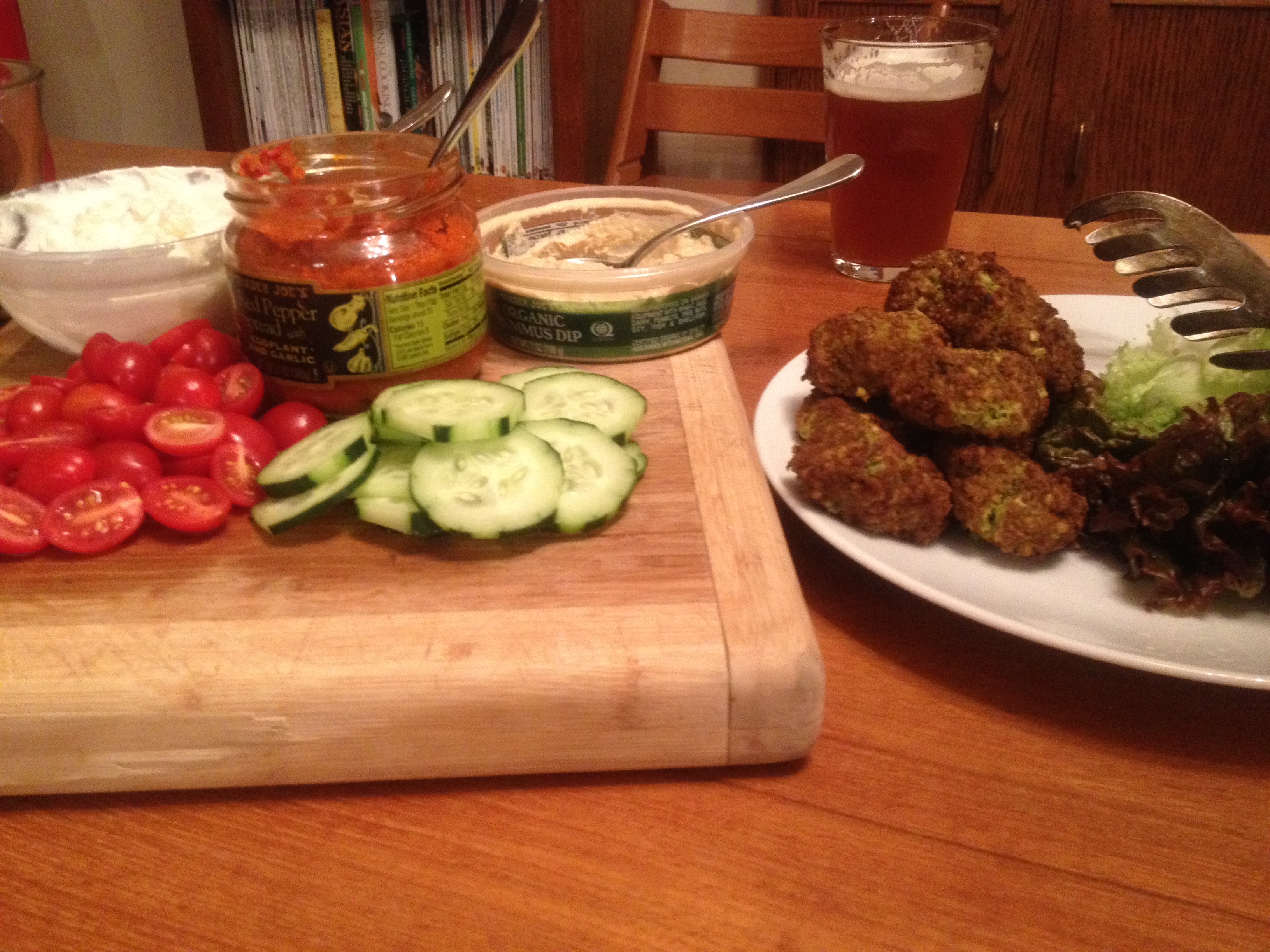
The thing that matters in a spread like this is the condiments.  Get your falafel going first–we baked them from frozen but you can also pan-fry or bake them from a mix.  Or, you know, you could make them from scratch, but that’s not how we roll these days.  Tonight, our Falafel Platter included sliced tomatoes and cucumbers, crisp lettuce leaves, hummus, ajvar (roasted red pepper and eggplant spread), olives, greek yogurt mixed with crumbled feta, pita bread, and, of course, sweet chili sauce.

The joy of eating like this is in assembling each perfect bite–or one big sloppy sandwich with a bit of everything.  I like using the lettuce leaves as wraps and the cucumber slices to scoop up extra hummus.  (The leftover tomatoes and cukes went into the remaining yogurt/feta mix to be eaten as a salad tomorrow.)

As you can imagine, this meal demanded a cold beer.  Luckily we filled our growlers with Mannys at Georgetown Brewing Company just today!


Zippy Noodle Curry with Tofu, Sweet Potatoes and Chard

J and I spent a week taking cooking classes in Chiang Mai once when we were kicking around Thailand for a few months.  (We also spent a week taking foot massage classes in Bangkok.  Both were pretty nice weeks.)  We love Thai food and occasionally dig into the freezer and pantry to bring the scents and flavors of Thai cooking into our home.

One of my favorite foods in Thailand was a rich, creamy noodle curry called khao soi.  This is not a recipe for khao soi.  You should definitely get yourself a bowl if you find yourself in Chiang Mai, though.  THIS is a very simple recipe based on the Big Curry Noodle Pot recipe in Heidi Swanson’s Super Natural Cooking.

In Zippy Noodle Curry with Tofu, Sweet Potatoes and Chard, “zippy” refers to both the flavors and the speed of making the dish.  (I’m funny, huh?)  Saute an onion, 1 big cubed sweet potato (I steamed mine first, but I think it was unnecessary) and some chopped garlic in a glob of heavenly-smelling coconut oil with 1-2 Tbsp. red or yellow curry paste.  Add a cubed block of extra-firm tofu and a few handfuls of chard leaves sliced to ribbons and stir to coat.  Pour in 2 c. veggie stock, 1 can of lite coconut milk, 2 tsp. turmeric, 2 Tbsp. soy sauce, and 1 Tbsp. sugar and simmer until the sweet potatoes are soft.  Meanwhile, cook 8 oz. fresh egg noodles in a separate pot.  Add cooked noodles and the juice of a lime to the curry.  Garnish with chopped cilantro, green onions and peanuts, and serve with chopsticks and a spoon.  Thai chile flakes, soy and/or fish sauce, and lime wedges at the table will let everyone perfect the dish according to their own taste.

Spinach-Mushroom-Swiss Egg White Frittata and Lentil Soup with Rosemary

As a mostly-vegetarian (and especially during this time in my life when I’m nursing babies), I find that one of my challenges is getting enough protein without overdoing it in the fat/calorie department.  (Not that I’m OPPOSED to overdoing it in the fat/calorie department–but, you know, moderation in all…nah, scratch that.)  So anyway, I am tentatively experimenting with things that I don’t normally consider food, like egg whites from a carton–which I can only bear to do because our chickens have stopped laying for the winter–and low-fat cheeses.  So if that sounds terrible to you, stop right here and skip to the soup below.  But if you’re looking for a way to add protein to your diet and/or cut back on fat and calories, this frittata isn’t half bad.

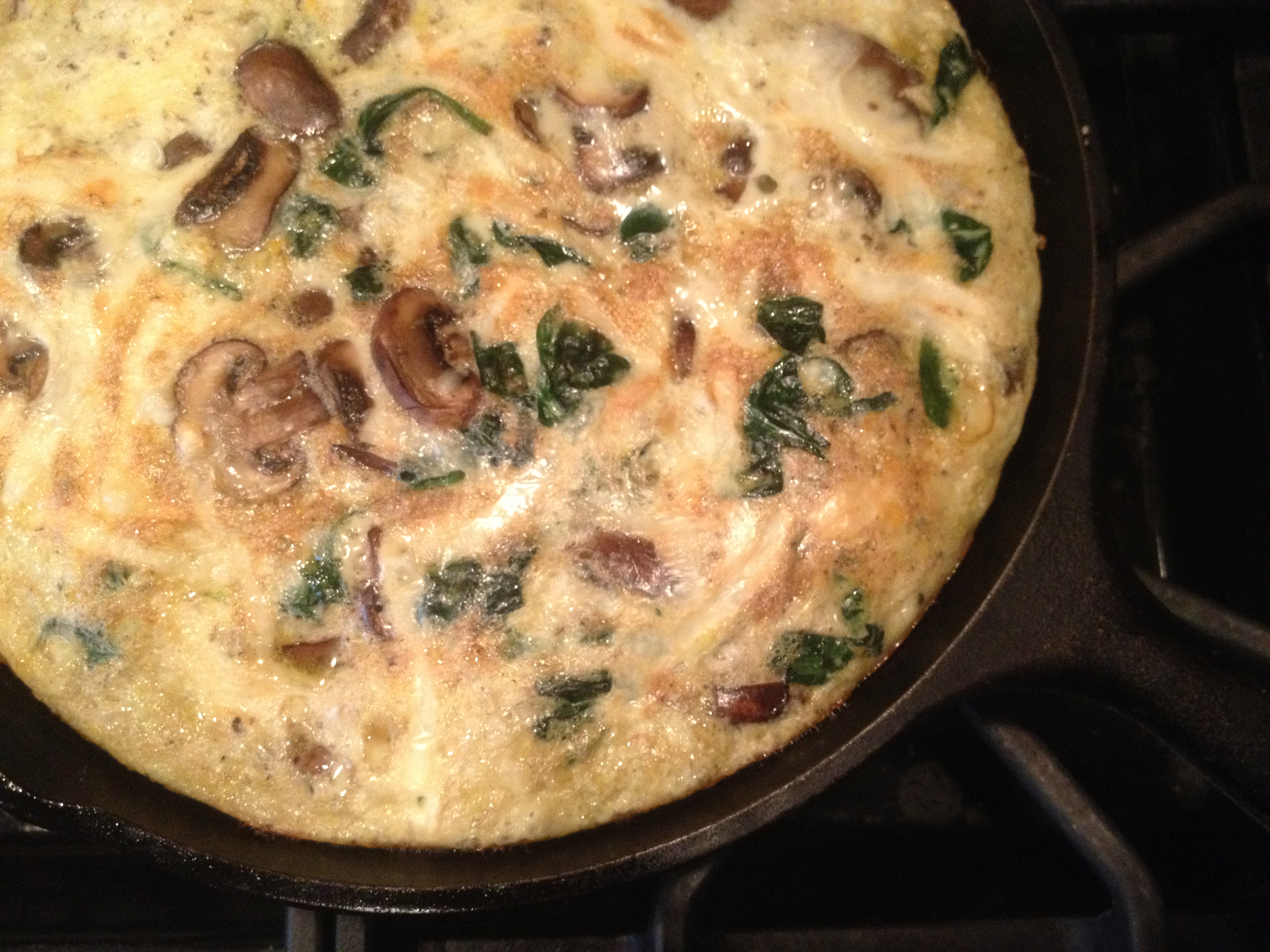
A Spinach-Mushroom-Swiss Egg White Frittata could really have any combination of veggies and cheese, of course, but here’s what I did: Cook nearly a pound of mushrooms like crazy over high heat in a little olive oil until they release their liquid and it evaporates and they get nice and brown. Then and only then, add a pinch of salt, then some handfuls of spinach, then another pinch of salt.  When the spinach wilts, take the pan off the heat and scoop the veggies into your waiting bowl of 16 oz. egg whites beaten with 4 whole eggs, more salt, a splash of water and 4 shredded slices of lite Jarlsberg cheese.  Return your pan to a medium-low burner, wipe it out and add a little more olive oil, and pour in the whole mixture.  Once the edges of the frittata have set, I like to transfer the pan to a hot oven to finish baking, then brown the top by flipping on the broiler for a well-supervised minute or two.  This was lunch today on a slice of toast with a drizzle of lemony, salty harissa oil–and it will be breakfast for the rest of the week.

To recover from my slight queasiness over the very idea of low-fat cheese, I needed a good honest lentil soup for dinner.  This is a pure, clean recipe, courtesy of Alice Waters from her book In The Green Kitchen.  Of course, I doubled the recipe, because you know how I feel about soup–and about leftovers.  Both divine.

Lentil Soup with Rosemary: Finely dice 2 small onions, 4 ribs of celery, and 4 carrots.  Sautee with a tsp. salt until the onion is lightly browned, then add 6 big cloves of chopped garlic and the chopped-up leaves of a big branch of rosemary.  When these additions become fragrant after a minute or two, add 2 c. sorted and rinsed tiny black or French green lentils,  3 1/2 quarts of water, and another Tbsp. salt.  Bring to a boil and simmer until everything is very soft, about an hour.  Season to taste with salt and black pepper and serve each bowl with a dollop of greek yogurt.