Writing about cooking lately has made me reflect on the fact that we think that cooking is harder than it really is. Take making a pot of beans. Simple, really. Beans, water, salt. That pot will feed you for a long time. Cooked beans freeze well. Dried beans cost a fraction of what you pay for canned beans. Canned foods, including beans, can contain unsafe levels of BPA as well as excessive sodium and preservatives. And still–still!–it wasn’t until a few years ago that I started using dried beans almost exclusively. It seemed like too much trouble to cook my own.
So it is with the zeal of a convert that I implore you to set aside a few hours some weekend to cook a pot of beans. I’m not saying the canned kind are wrong, and I always keep a few cans in my pantry just in case, but there are so many good reasons to cook dried beans yourself.
Once you decide to make the leap, it’s hard to go wrong. You can soak your beans, or not. You can salt them as they cook, or wait until the end. You can use this season’s beans from a crunchy co-op that has amazing dried bean turnover, or cook up the bag that’s been hiding in the back of the cupboard for years. Despite the vast number of opinions on each of these topics, in my experience you can tune all that out and your beans will turn out just fine.
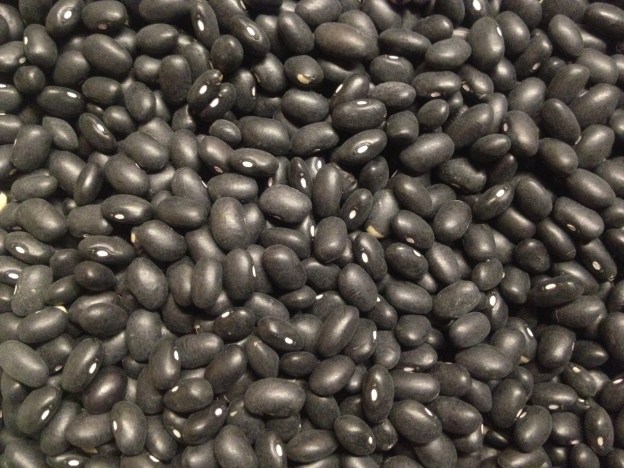
Ready? Good. First, keep an eye on your beans as you take them from the bag or jar to make sure that there are no little rocks mixed in. Second, measure them out so you have an idea of how much salt to add later. Finally, give them a good rinse before putting them into your pot.
I like to soak my beans only because it speeds the cooking time on the stove (and thus the actual supervision required). You can soak your beans covered by a few inches of water overnight, or you can “quick soak” them: put them in a pot, bring it to a full boil for one minute, then turn off the heat and leave your covered pot alone for an hour. At this point you can drain the beans, or not. (Some claim that draining the water after an initial soak helps make the beans more digestible. Others say you’re just pouring valuable nutrients down the drain. No worries. Your beans will be great either way.)
So now your black beans (soaked or unsoaked) are in your pot. Cover the beans with a few inches of water. (This can be the soaking water if you soaked the beans, or new water.) Bring the pot to a boil for a few minutes, skimming off any foam that gathers, then reduce the heat to a simmer. At this point you can leave the beans completely plain, or add any additional flavorings you’d like: some chopped onion, chopped jalapenos, dried epazote, dried oregano, crushed garlic cloves, chopped cilantro stems, whatever. I usually make my beans rather plain, then add more flavorings later. Leave the simmering pot partially or fully covered. Cook for at least half an hour if you soaked the beans, or an hour if you didn’t, then taste a bean. Once they begin to soften, add about 3/4 tsp. salt per cup of dried beans that you started with. Continue cooking until beans are completely soft. This may take two hours or more if you are using unsoaked beans. (The cooking time will vary according to the beans’ freshness; even soaked beans can take nearly two hours if they are quite old.) If the water seems to be getting low, add more boiling water. If there is too much water when the beans are done, pour some off. Taste the beans as you go. If they don’t taste great to you, they probably need more salt. Add a small amount at a time and simmer for a few minutes to let it soak in before tasting again.
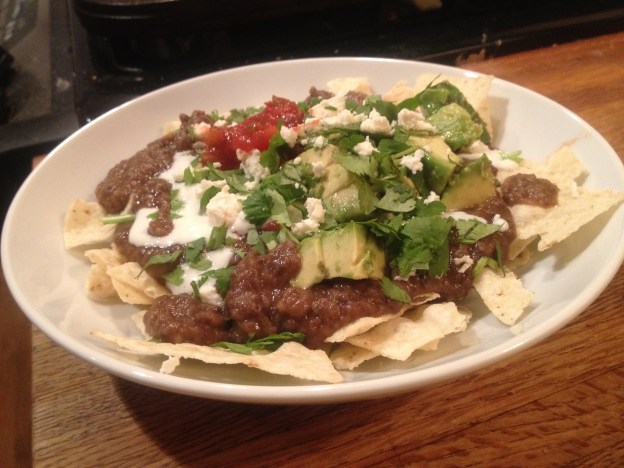
Looking for ideas to use up your delicious pot of black beans? Mix with rice, top with salsa and it’s dinnertime. Or click the “Mexican Flavors” link on the sidebar for emmycooks recipes (like maybe these chilaquiles?) that await your black beans with open arms. Some Recipes to Show Off your Black Beans:
Black Beans with Cilantro and Lime
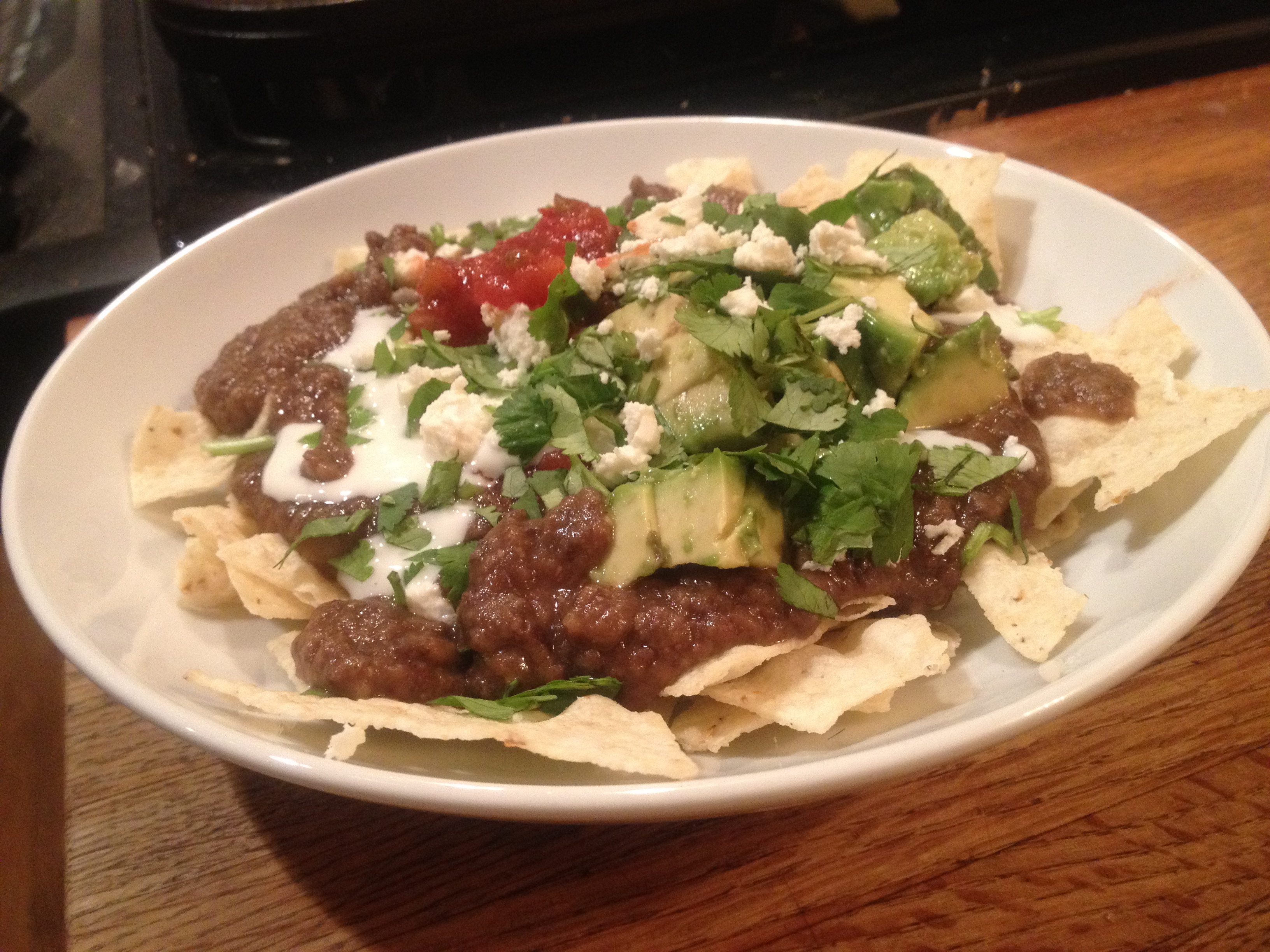
Chilaquiles
Vegetarian Taco Salad
Quinoa Chili with Red Peppers
Enchilada Bake with Black Beans and Tofu
Huevos Rancheros
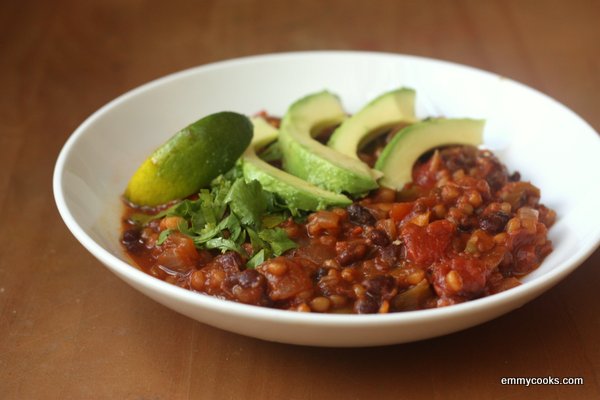
Winter Wheat Berry Chili
Southwestern Frittata with Peppers, Black Beans, and Cheddar
Black Bean Tacos

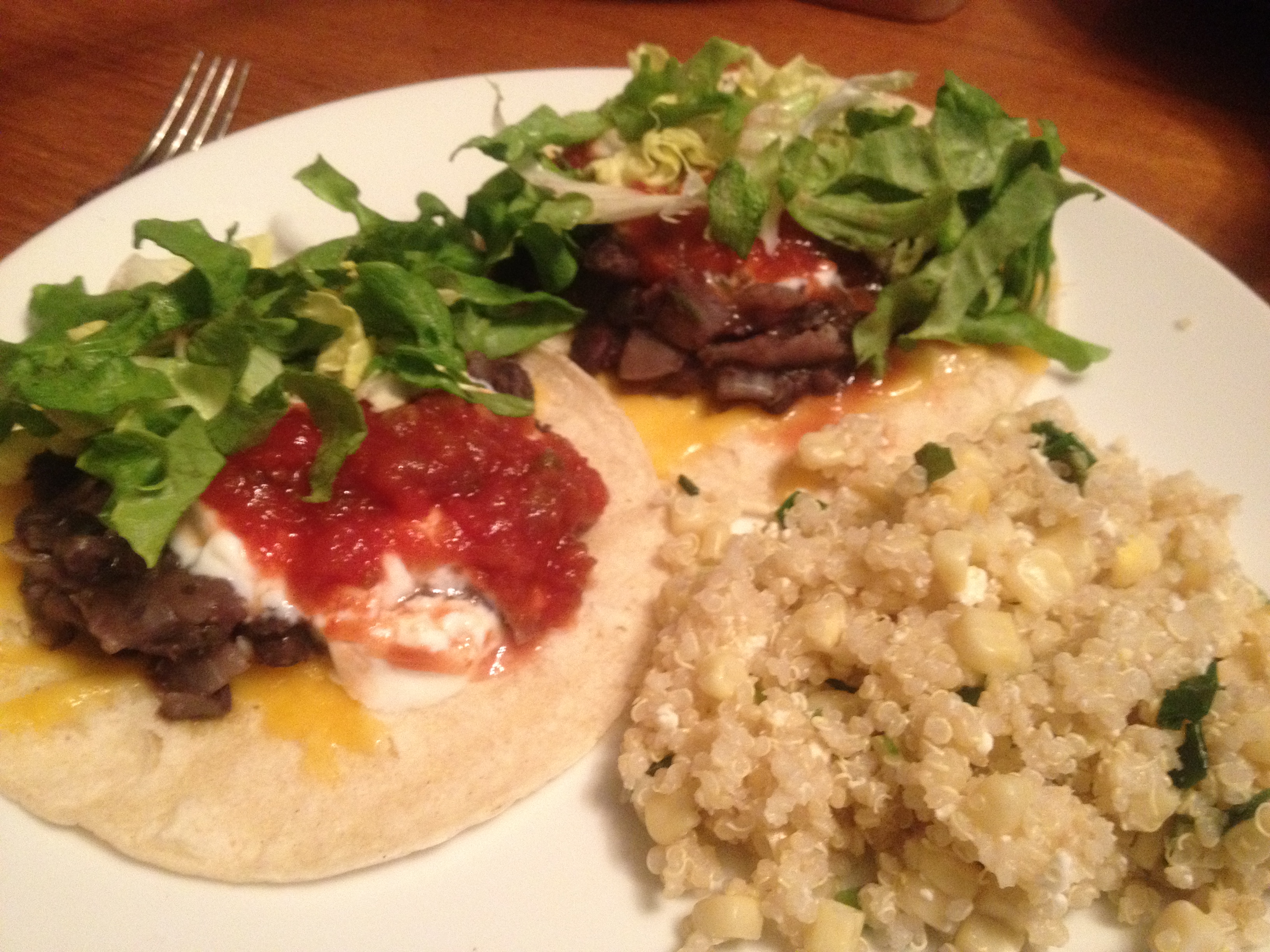 Continue reading Vegetarian Black Bean Tacos (click for recipe)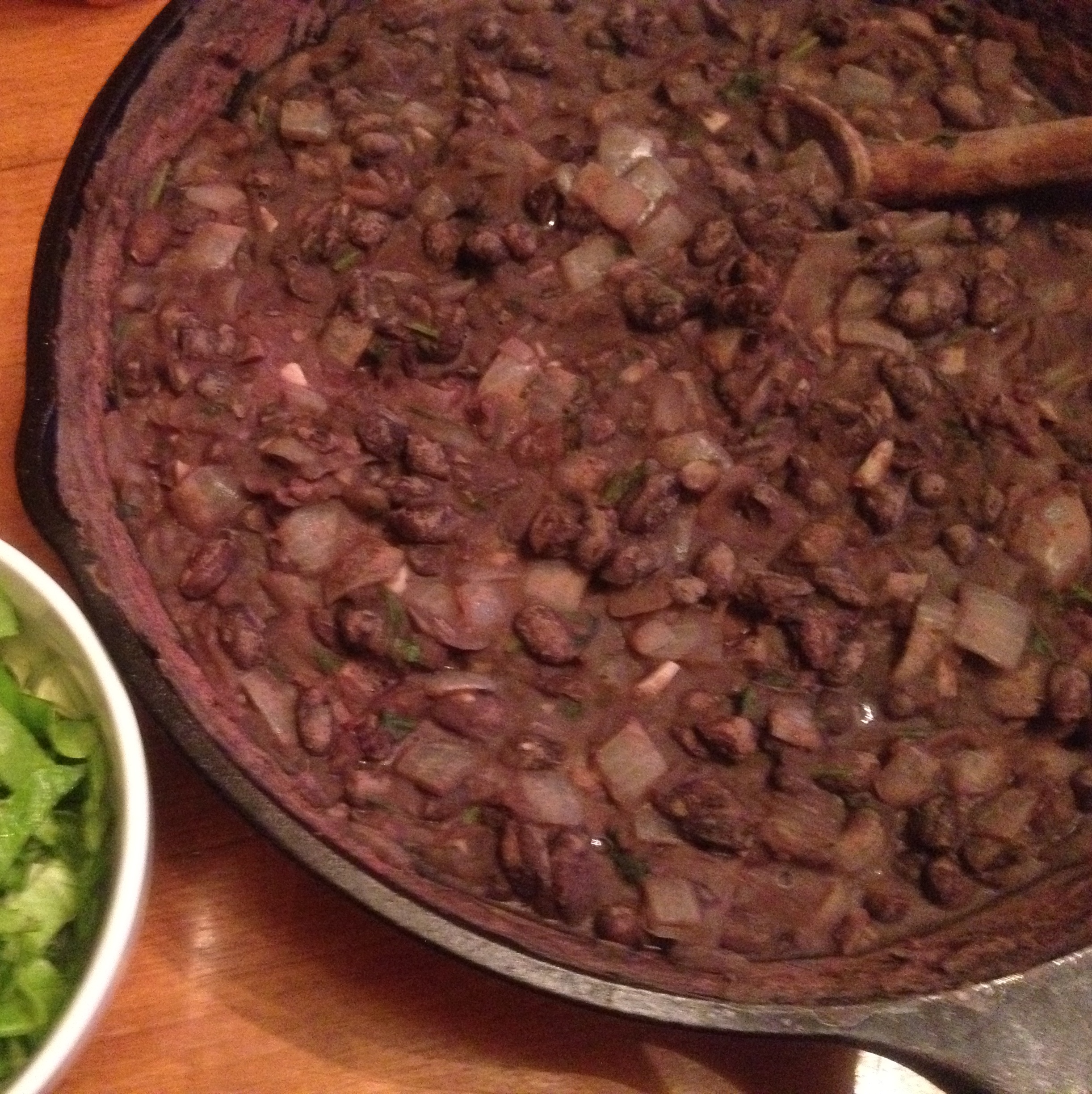









 Emmy Cooks