Category Archives: Vegan or Would-Be-Just-As-Good-Vegan

Baked Sweet Potato Fries

End of the weekend.  A sweet one, full of friends, that left the kitchen a disaster.  Everyone’s gone, kids are sleeping, we’re talking in the kitchen.  I’m eating sweet potato fries.  Cold.  Off a cookie sheet.

Casually at first–there are only a few left, it seems easier than putting them away.  I absent-mindedly take another, wonder if we could just clean up next weekend instead. (Is that soon?)  Then I give the tray my full attention to peel up the last sticky, crispy, sugary bits of sweet potato.  No wonder my kids love these.

If your kids don’t get to them first, you’ll be glad to have these roasted sweet potato fries alongside a burger or sandwich of any sort, for an afternoon snack, or topping an untraditional soba or sushi rice bowl.  Or maybe, like me, you’ll find yourself eating them cold from the pan as dessert.

Baked Sweet Potato Fries: Cut sweet potatoes into batons of any size.  Place on a baking sheet and toss with olive oil and salt.  Roast at 450, checking every 10 minutes and turning them as they start to brown.  Remove when edges are crisp; smaller fries may be done before larger ones.  Total baking time depends on how thickly the sweet potatoes are cut.  Serve with ketchup, or maybe a garlicky aioli.

The Best Red Lentil Soup of 2012

It’s no secret around here that I like to cook big when I can.  A big pot of beans, a big pot of soup, a big pot of chili.  Doubling a recipe saves time and isn’t much more work than making a single recipe.  Usually when I double up, I’m feeding a crowd or making one meal for tonight’s dinner and another to freeze for another time.  But then there are occasions when I make a huge pot of something and just eat it twice a day for a week.  This soup is one of those somethings.  It’s that good.

You might think that March 2 is a little early to be declaring anything the “Best of 2012.”  But I’m pretty sure.  I’ve had a go-to red lentil soup recipe for years (it was The Best Red Lentil Soup of 2008 or thereabouts, and has held the title since).  This soup has replaced it with a vengeance.

I knew it would be good, because it was recommended to me by the same friend who gave me that amazing chilaquiles recipe.  She is a great cook and discerning recipe collector, and when she tells me to try something I always do.  This recipe is slightly adapted from 101 Cookbooks, which is another good sign, because I always like Heidi Swanson’s flavorful and sometimes quirky cooking.  In this case her stroke of genius is to add raisins to the soup, which plump up into barely-there bursting bits of sweetness mingled with the curry and coconut flavors.  In case you are feeling cautious to begin with, I will give you the regular-size recipe and you can use your discretion as to doubling it.  (You definitely will next time.)

The Best Red Lentil Soup of 2012: Bring 1 c. red lentils and 1 c. yellow split peas (both picked over and well-rinsed) to a boil in 7 c. water.  Reduce heat to a simmer, add a chopped carrot and 2 tsp. finely minced ginger (I like to grate it with my Microplane), and simmer until split peas are entirely soft, 30-45 minutes.  Meanwhile, heat a gob of coconut oil in a separate pan and saute a bunch of chopped green onions (reserve a handful for garnish) with 2 more Tbsp. minced ginger and 1/3 c. golden raisins.  After two minutes, add 2 Tbsp. Indian curry powder and saute for another minute, stirring constantly, then add 1/3 c. tomato paste and stir for one minute more.  When the lentils and peas are soft, add the tomato-spice mixture to the soup with a can of coconut milk and 2 tsp. salt.  Simmer uncovered for a bit to blend the flavors and thicken the soup; you can adjust the consistency with more water or more cooking.  Serve over cooked brown rice, garnished with those reserved chopped green onions, chopped cilantro, and a dollop of Greek yogurtIf you try this and know of a better red lentil soup recipe, please let me know in the comments.  I never get tired of lentil soup.

White Bean and Spinach Soup

I’d say that in the past few months, I’ve been quite successful in my quest to stop feeding my family scrambled eggs for dinner all the time.  But I’m still not much of a planner.  Which means that the dinner hour is often neigh by the time I roll into the kitchen, wondering how our evening meal is going to materialize.

At times like these, it helps to have a well-stocked pantry.  And freezer.  This is one of those recipes that you can spend all afternoon making–or it can take 30 minutes if you keep the right ingredients in stock.  In this case, the right ingredients are an onion, a leafy green vegetable, a good vegetable broth, and some well-seasoned home-cooked white beans.  (Of course you can substitute canned beans, but you must first brown an onion, then toss in a handful of chopped garlic and sage for a few minutes, then add the beans and cover with water or vegetable broth and simmer to let the flavors blend.)

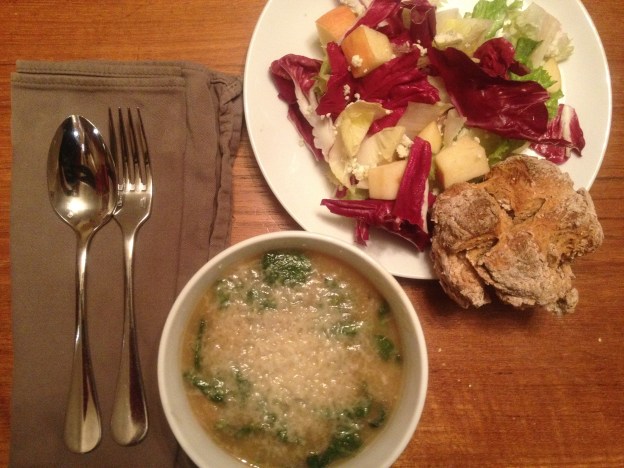
Do you cook your own beansMake your own broth?  I do, because I find the homemade versions of these things so much better and SO much cheaper than anything I can buy.  This might seem inconsistent with my professed inability to plan ahead, but I just do it every once in a while when I will be home on a Sunday afternoon: put a huge pot of beans on the stove or make eight quarts of stock.  It helps that I have a large freezer to store these things in.  What do you people do in Manhattan?  Anyway, I will start sharing recipes for some of the pantry basics that make it easier for me to get a good meal on the table quickly.  Another day.Today, White Bean and Spinach Soup: Grab a quart of good vegetable broth and a few cups of well-seasoned white beans from your freezer.  Warm the beans in a soup pot with a cup or so of broth while you saute an onion over high heat in a separate pan.  Once the onion is nearly golden and nearly caramelized, use a slotted spoon to scoop about half your beans into a blender and puree them with the onion and another cup of broth.  Add the puree to your soup pot and stir in a big bunch of chopped spinach (chard, kale, or other greens would also be great).  Simmer until the greens are tender, then thin the soup to your desired consistency with additional broth and season to taste with salt and pepper.  Serve under a shower of Parmesan shavings or a drizzle of olive oil, with crusty rolls on the side.  (The one pictured is a mini whole wheat soda bread, recipe to come after a little more experimentation.)  And what’s that gorgeous salad, you ask?  Radicchio? Endive? Apples? Blue cheese?  Oh, yes.  Hop on over to the lovely blog Salt On the Table for the full recipe.

Vegetarian Enchilada Bake with Black Beans and Tofu

The part of me that enjoys nourishing others is mightily satisfied when I make a casserole.  I know it seems stodgy, but making a heavy pan of food meant to feed a crowd is an act of love.  Maybe that’s why casseroles were so popular in the ’70s–wasn’t love in vogue back then?

We’ll call them love enchiladas, then.  Although there are lots of other good things in here, too: sweet vegetables, a good boost of protein in the black beans, tofu, and cheese, a kick of chile and spice.  But, as usual, there are no hard and fast rules.  Use what you have.

And a love note to vegans or those in a rush: the black bean/tofu/veggie mix also makes a killer taco filling.  Vegetarian Enchilada Bake with Black Beans and Tofu: To make your enchilada filling, saute a diced onion and a diced red pepper over medium-high heat until the onion begins to brown.  Add a diced zucchini, a few cloves of chopped garlic, and some corn.  Add a few pinches of salt, a tsp. dried oregano, and a couple tsp. each of cumin and chile powder.  Stir in a few cups of black beans (with their liquid if you cooked them; drained if they’re canned) and a block of diced tofu.  (If you plan in advance, you can freeze then thaw and crumble the tofu; it gives it a nice texture.)  Add some water if necessary to keep the mixture from sticking, simmer for a few minutes to blend the flavors, then taste for salt and mix in a handful of chopped cilantro at the end.  You want the mixture fairly saucy so your casserole won’t dry out while baking.  Pour a splash of enchilada sauce into a 9×13 pan (I used a prepared one this time, but if you have time it’s always worth making your own from dried chiles).  Layer your ingredients on top of the sauce as follows: corn tortillas to cover the bottom of the pan in a single layer, 1/2 of the veggie mixture, a drizzle of enchilada sauce, a sprinkling of melting cheese, a crumble of feta cheese.  The next layer is corn tortillas, 1/2 the veggie mixture, more corn tortillas, then the rest of your enchilada sauce.  Bake covered at 350 until the enchiladas are hot and bubbling (20-30 minutes if your veggie mixture started out hot), then uncover, sprinkle the top with more of both kinds of cheese, and continue baking until the cheese melts.  You can always turn on the broiler to get the top nice and brown.  Serve with brown rice, a green salad, and lots of good toppings: chopped cilantro, sliced avocado, salsa, sour cream, and some of that amazing cilantro pesto you keep in your freezer.


Roasted Maple Squash Soup

Some days you need something delicious in a hurry. Preferably something warm, if it’s February and you live in Seattle. Preferably soup.  In fact, hopefully you have some of this soup stashed in your freezer.  If you don’t now, you will soon.

This is the kind of soup that can turn you from a recipes-only cook into a confidently-winging-it cook.  It’s kind of foolproof that way.

Roasted Maple Squash Soup: Roast a winter squash.  Any winter squash.  Roast a few, while you’re at it.  Cut each in half, rub the cut sides with oil, bake face down on a rimmed sheet at 400 degrees until soft.  (Scoop out the seeds and save them in your freezer to make vegetable broth.)  Scoop the roasted flesh into a soup pot.  (Put the peel in the freezer with your seeds.  Mmm, homemade veggie broth.  That will be another post.)  Cover your squash with broth, maybe one that you’ve made yourself.  (Come to think of it, you could make a quick broth now with those seeds and peels: cover with water and add 3/4 tsp. salt per quart of water and maybe a chopped onion or some herbs, simmer 30 minutes and strain.)  So: roasted squash, broth, salt and maple syrup to taste.  Simmer, mash or puree the squash, adjust the seasonings.  Maybe that’s it.  Maybe you’re feeling indulgent?  Try a splash of cream or coconut milk.  Make sure you make some extra soup for the freezer.

Roasted Cauliflower

Yesterday got me thinking about flavorful vegetarian cooking.  I have been a vegetarian (or, now, a mostly-vegetarian, with apologies to those who are offended by the concept) for my entire cooking life.  So I have never relied on meat to flavor my food.  What do I rely on?  Vegetables, heat applied to vegetables, fat, salt, spices and herbs.  I also know and revel in the range of textures and flavors that each vegetable can provide on the plate: a beet can be meltingly sweet and earthy or brightly crisp and bracingly imbued with lemon or ginger.  Fennel can be a licorice tangle of crunch, a whisper of greens in a salad, or carmelized to a sweet and savory mush that is barely haunted by anise flavor.  And I get excited every time I discover a novel way to cook a vegetable.

By way of illustrating the range of a humble vegetable, I thought I’d share a very simple but utterly delicious recipe for roasted cauliflower.  Compare it to this simple, creamy 5-ingredient Cauliflower Soup (cauliflower, onion, olive oil, water, salt).  Compare it to this Smoky Cauliflower Frittata.  You can take a cauliflower in a lot of directions.  But once it’s roasted, that’s pretty much the end of the line for a cauliflower in our house.  It often gets eaten off the sheet pan before dinner is even on the table.

Roasted Cauliflower: Chop one head of cauliflower (or two, if you want one left to put on the table with dinner) into medium florets, and chop the remaining stem into slightly smaller pieces.  If the leaves are large, chop them as well, otherwise leave them whole.  Pile onto a roasting pan, including the tiny bits–these will brown into delicious little salty bites.  Toss with olive oil and salt and roast at 450.  Turn with a tongs after 20 minutes, then every 10 minutes after that, until they are nice and brown on all sides (about 45 minutes total).  Hide from passers-by until serving.


Vegetarian Split Pea Soup

I like to have a pot of soup around.  It can be simmering on the stove or left over in the fridge or even packed away in the freezer–I just like to know it’s there.  I eat a lot of soup.  It’s a quick lunch, an easy dinner, and you can always double the recipe to feed even more of the people you love.  (But let’s be clear: I almost always double the recipe whether company’s coming or not.  See above.)

I make lentil and bean soups often but, strangely, I don’t think I had ever made split pea soup before this week.  You know why? Because the recipes always call for an “optional” ham hock.  Whatever that is.  And I can never believe that recipes calling for “optional” meat are going to be any good if you leave the meat out.   I automatically skip over any recipe that calls for bacon and then implies that the vegetarian version will be just as good if you simply omit the bacon.  The bacon is the FLAVOR in that recipe, and a good vegetarian recipe builds flavors in a different way, through spices and cooking technique.

But when I made that Smoky Cauliflower Frittata recently and J said it tasted meaty, I had the obviously-delayed epiphany that the flavors that bacon and ham hocks add are smoke and salt.  I was ready to make split pea soup.  I went right to the source for my recipe: Pea Soup Andersen’s Facebook page.  This recipe is vegetarian in the original, but just to be on the safe side–in case those ham hock recipes are on to something–I replaced the cayenne with hot smoked paprika anyway.
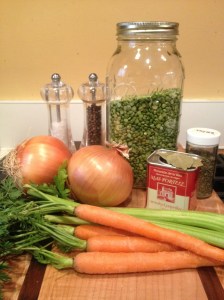
This just the kind of recipe I like: simple, flavorful, hearty. I doubled the recipe, of course, but I supposed you don’t HAVE to.  (A double recipe made a truly huge pot of soup.  The original recipe says it makes 8 bowls, which is a regular-big pot of soup.) 

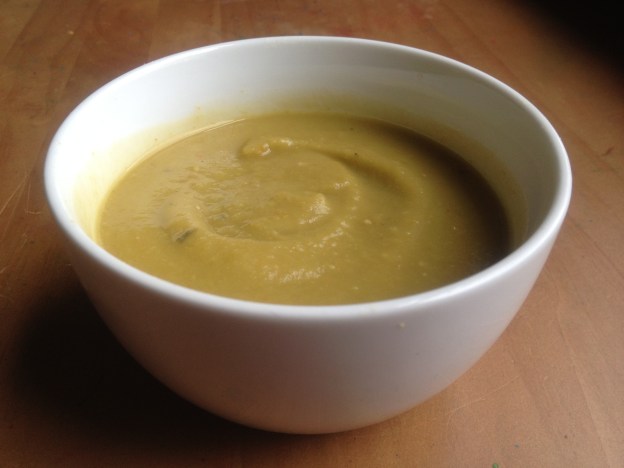
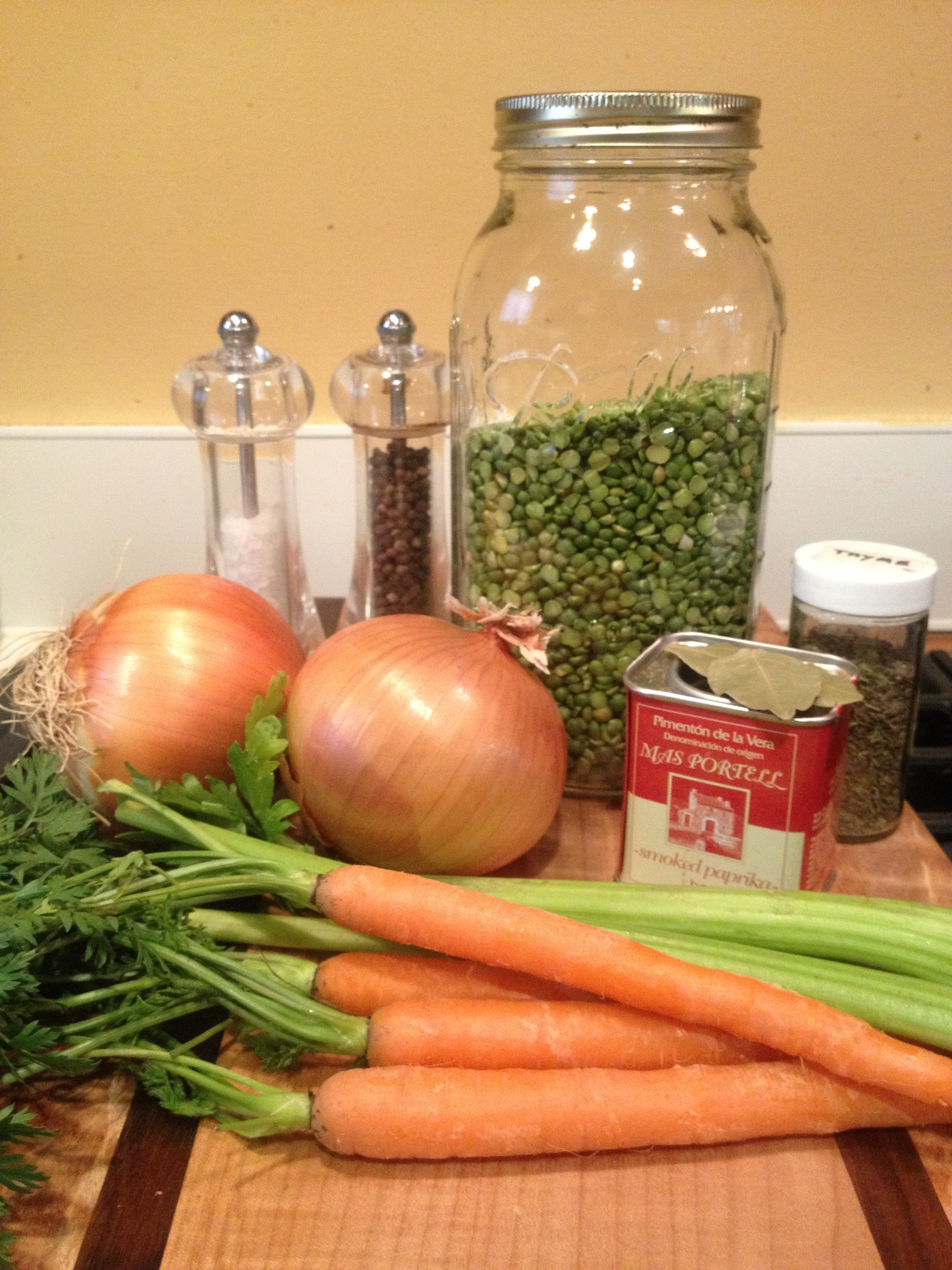
To make a regular-big (not truly huge) pot of Vegetarian Split Pea Soup, dice a large onion, a large carrot and a celery stalk and saute in olive oil until the vegetables soften and the onion is translucent.  Add 1/4 tsp. dried thyme and 1/2 tsp. smoked paprika and stir, then add 2 c. sorted and rinsed green split peas, 8 c. water, a bay leaf and 1 1/2 tsp. salt.  Maintain a peppy boil for 20 mins, then reduce heat and simmer until the split peas are very soft, probably about an hour in all, stirring occasionally.  Season with salt and pepper.  I originally planned to puree the soup, but once I cooked the peas down to mush I loved that texture too.   It tastes great both ways, but I think the pureed version looks a little more elegant.
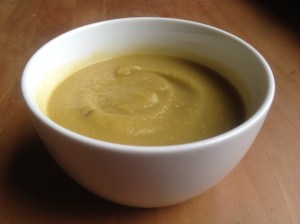
If you want to get fancy, you could top the soup with another sprinkle of smoked paprika or some homemade croutons.  Or serve it with a nice easy bread or homemade rye crackers.  Or just keep it in the fridge to reheat (thinned with a little water) for lunch this week.

Say What You Mean With Homemade Conversation Hearts

I have to start with a few confessions here.  One: This may be the farthest thing from “real food” that will ever grace these pages.  Two: Making homemade conversation hearts is about ten times more cutesy than I am in real life.  Three: Even though I’m trying to play it cool, I secretly had so much fun making these with my three year old.

There are, I suppose, a few good reasons to make your own Valentines Day conversation hearts, especially if you happen to have time to kill and an enormous quantity of powdered sugar on your hands.  The boxed kind have no fewer than five unrecognizable ingredients.  They taste awful.  And they say things like “text me” these days.  Wouldn’t you rather personalize yours with a message like “Marry Me” or “I think we should just be friends”?Conversation Heart Cutouts emmycooks.comEasy peasy.  Enter homemade conversation hearts.  I have quite a fondness for the CakeSpy cookbook Sweet Treats for a Sugar-Filled Life, which inspired this wacky project.  And it was easier than I thought it would be.

Please note that if you are going to get crazy and make these, you should start ASAP.  The hearts need to dry for 24 hours before you can write on them.

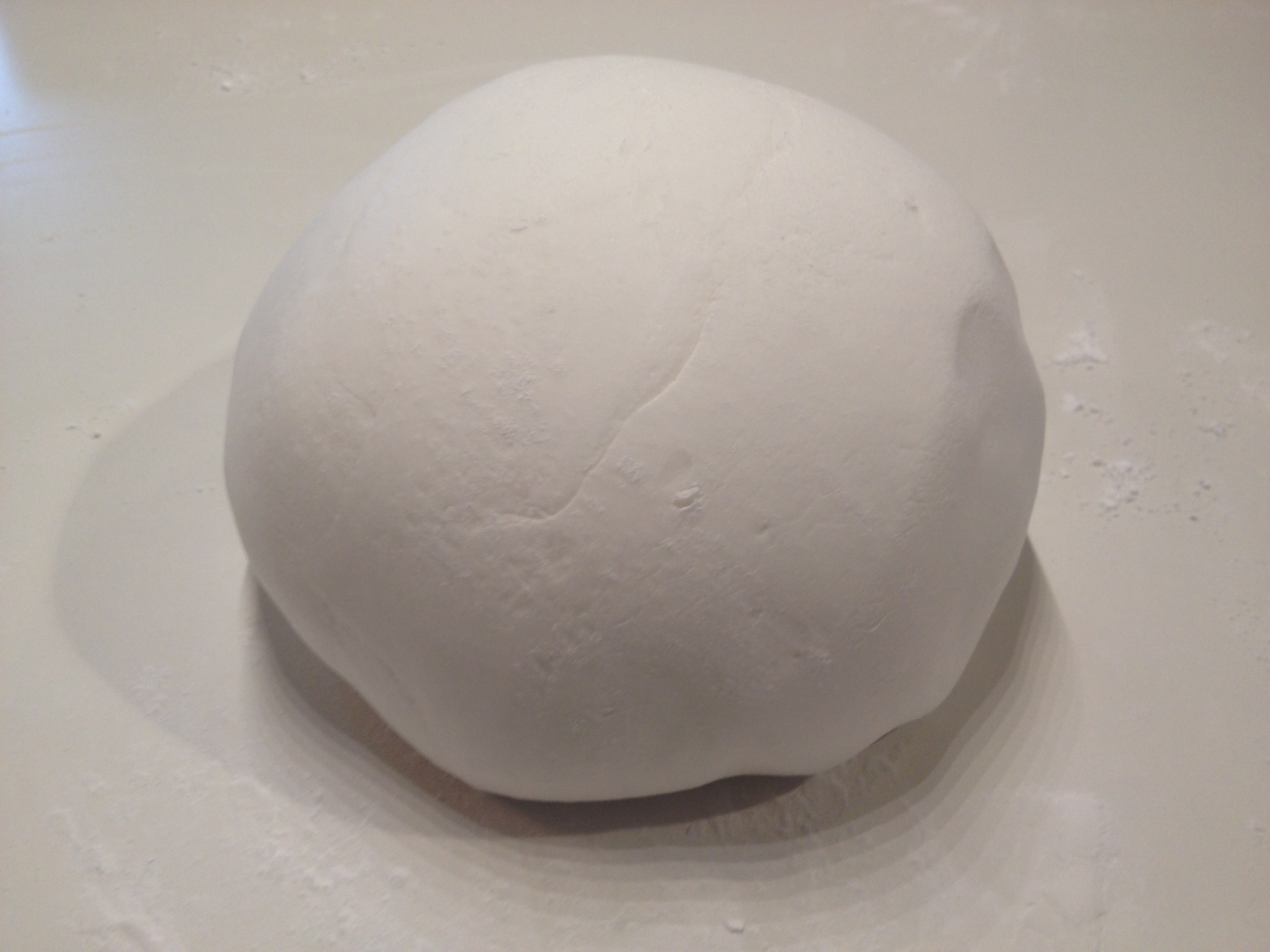
DIY Conversation Hearts start with a small bowl, in which you combine 1/2 c. water, 2 tsp. light corn syrup, and 1/4 oz. powdered gelatin.  Whisk well, microwave for 30 seconds, then whisk well again.  Dump mixture into the bowl of your mixer with 1 c. powdered sugar (in case you’re shopping, I used almost 2 1/2 lbs. powdered sugar in all).  Turn mixer on low and slowly incorporate 2 lbs. powdered sugar, scraping the bowl down occasionally.  Turn your sticky dough out onto a surface heavily dusted with MORE powdered sugar and knead like bread dough, adding more powdered sugar as you go, until the dough is satiny rather than sticky.

Divide the dough into as many colors as you want, and knead a few drops each of food coloring and flavoring (I used almond extract) into each ball.  This step is messy; I lined my counter with parchment paper to avoid staining.  I also added more powdered sugar as I worked in the liquid color and flavor.

Roll the dough out 1/8-1/4 inch thick.  Use heart -shaped cutters (I used a set of fondant cutters) to make tiny or almost-tiny hearts.  (Smaller = more realistic. Bigger = easier to write on.)  Pinch the scraps back together and re-roll.  The original recipe said it would make 100 hearts, but it actually made a gazillion.  Really.  More than 500.

Let the hearts dry on parchment paper for 24 hours, then use food coloring markers (like Gourmet Writer Food Pens) to ink the hearts with Valentines messages that express your own true self.  If that means writing “text me,” so be it–at least the recipient will know that you really mean it.

Conversation Heart Scraps emmycooks.com

Roasted Tomatoes, or, How to Coax Summer Flavor from Winter Tomatoes

Winter tomatoes, blah, we all know that.  At least in these latitudes.  When I visited California in December, my mom had a 10-foot Roma tomato plant that had climbed beyond its trellis into the apple tree and was still fruiting as it reached for the winter sky.  Here in Seattle, I can barely get a tomato to ripen in my back yard in September.  But that’s a different story.

This is not, mind you, a recipe for turning a winter tomato into a summer tomato.  There is nothing you can do in mid-February to turn a hard, lifeless winter tomato into the juicy, fragrant, wonderous thing that a summer tomato is.  This is a recipe for something different altogether.  Something jammy and sweetish, but with the acid undertones of tomato flavor.  Something with a little chew and a little luscious pulp and juice.  Something you will want to eat a lot of.

In the summertime, I like to buy tomatoes by the box to roast and freeze for winter.  We use them all year on pizzas, in soups and pastas and sandwiches, in pots of white beans.  They’re great with roasted garlic, or smeared onto a piece of toast with fresh goat cheese.  But eventually we run out.  These roasted tomatoes can be used in all the same ways.

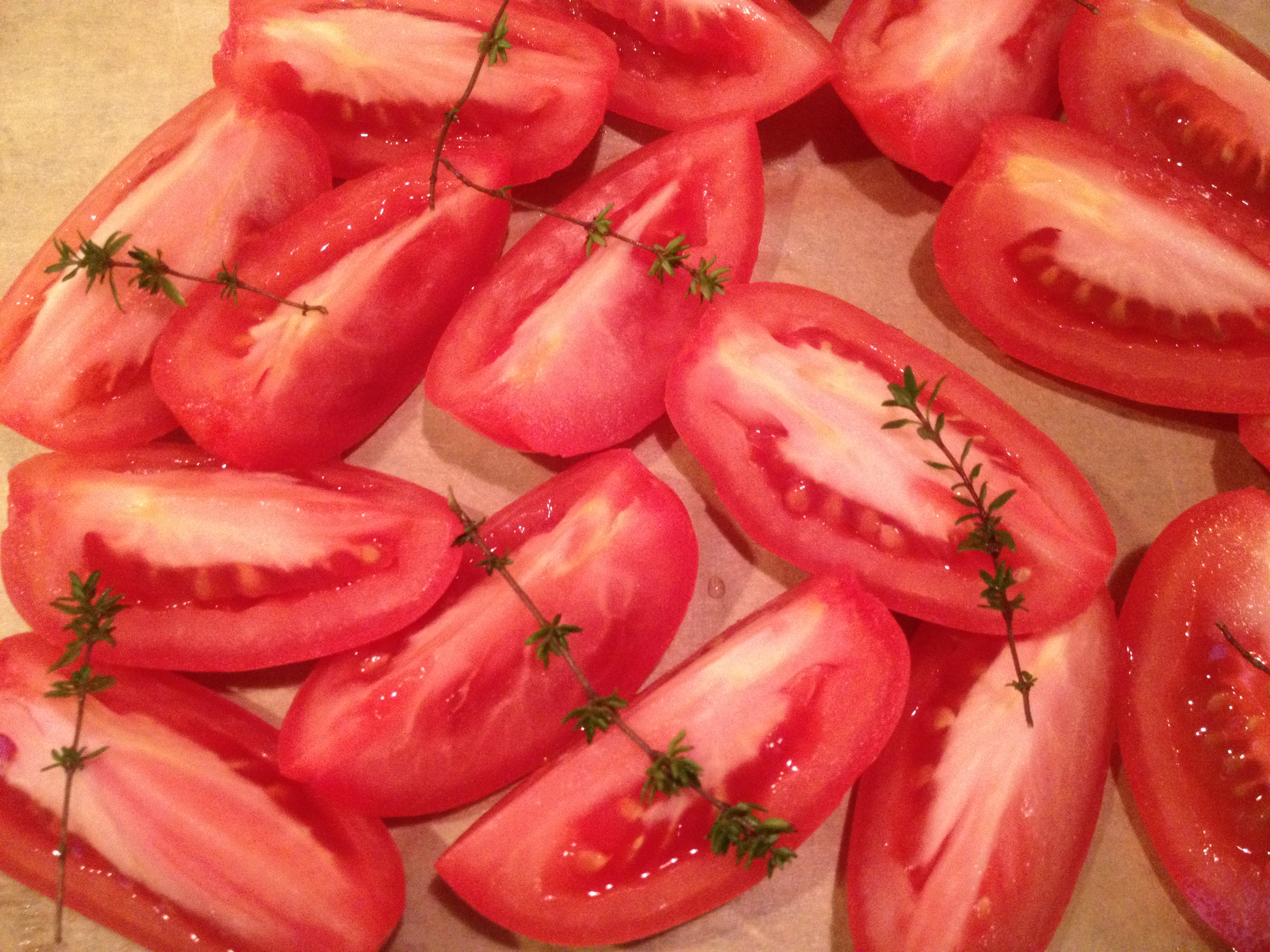
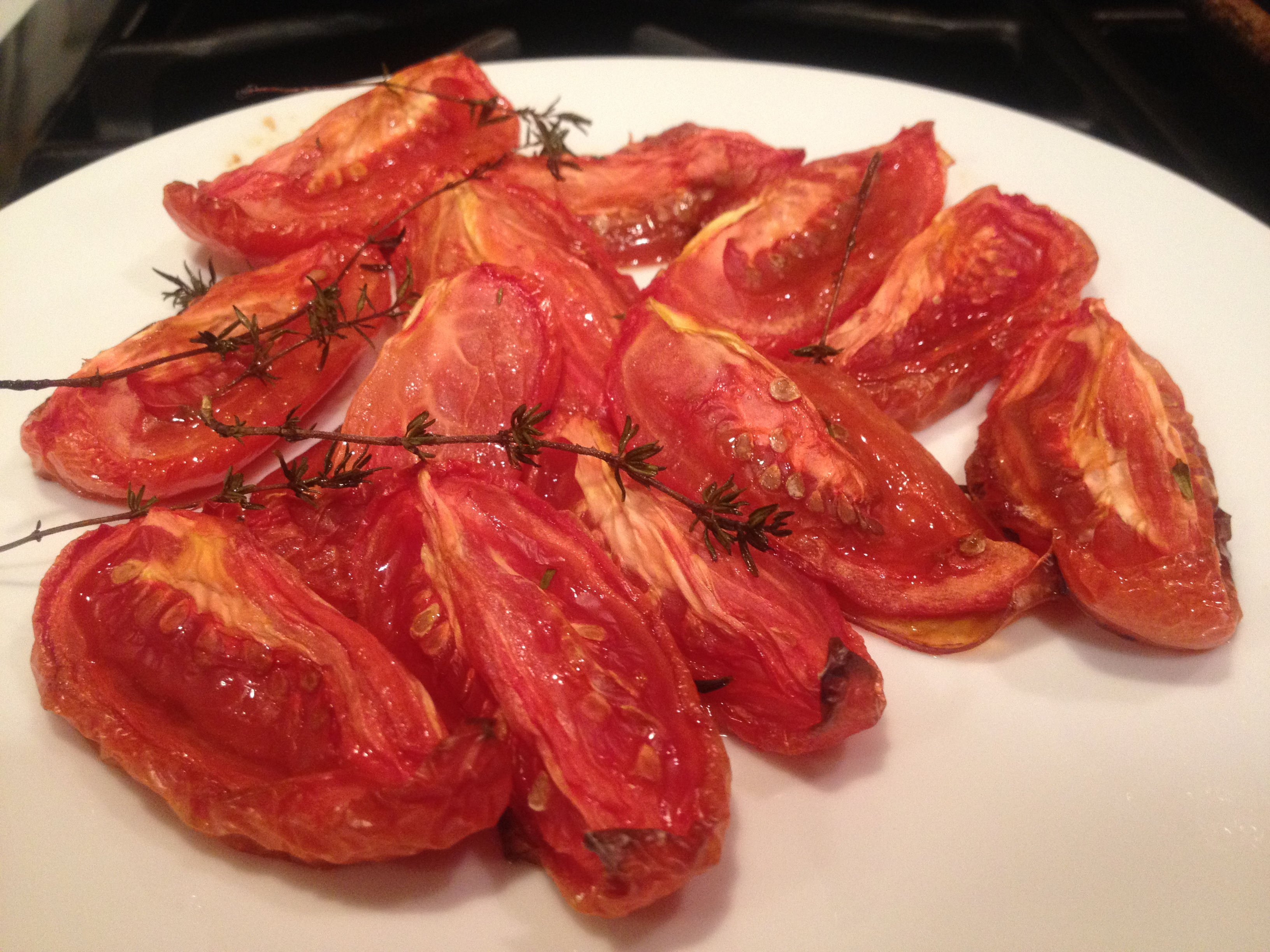
Roasted Tomatoes take some time, so start early or make a batch on the weekend to use throughout the week.  Quarter Roma tomatoes and place them on a baking sheet with a handful of thyme sprigs.  Drizzle with olive oil and a little balsamic vinegar, which will sweeten as it reduces, and sprinkle lightly with salt.  Bake at 275 for a long, long time.  Maybe two hours.  You want the edges to begin to brown and the bodies to collapse into a succulent, semi-dried state.  Taste one.  If it is watery, or if it still says winter tomato to you, leave it in a bit longer.

These tomatoes would be darn tasty, come to think of it, on yesterday’s homemade spinach pasta.  We’ll have to make that again soon.


Got Tortilla Chips? Make Chilaquiles!

I understand that Super Bowl Sunday is a day devoted to snacking excess.  But when it’s all over, and you’re looking to recover with a healthy meal this week, try this recipe.  (Or make it right away without the cheese to knock the socks off the vegans at your Super Bowl party–in which case you should call it “Vegan Nachos.”)

I don’t think that this bowl of spicy, smoky, chipotle-spiked deliciousness technically qualifies as chilaquiles, but that’s what we call it.  And it’s what Jack Bishop calls it in A Year in A Vegetarian Kitchen.  Based on my exhaustive research (read: eating my way through Oaxaca a few years ago), this dish may really be closer to enfrijoladas.  But whatever.  I’m no purist.  You can do some research on Wikipedia and make your own decision.

A few notes on the ingredients.  A more authentic recipe would have you quarter corn tortillas and fry them (or, more realistically around here, bake them in the oven) until crisp.  But THIS recipe uses tortilla chips.  It’s a time-saving shortcut, and you are going to have all those leftover bags of chips after your Super Bowl party.  But if you prefer to start with corn tortillas, more power to you, just brush both sides with oil, sprinkle with salt, cut them into 1/2″ by 2″ strips and bake them at 350 until they start to crisp (maybe 10-13 minutes), then set them aside to cool while you do the rest.  And about the chipotle puree: buy a can of chipotle chiles in adobo sauce, scrape the entire contents into your blender, and whizz to a puree.  Keep it in a jar in your fridge.  Use it on everything.  Now back to the chilaquiles.

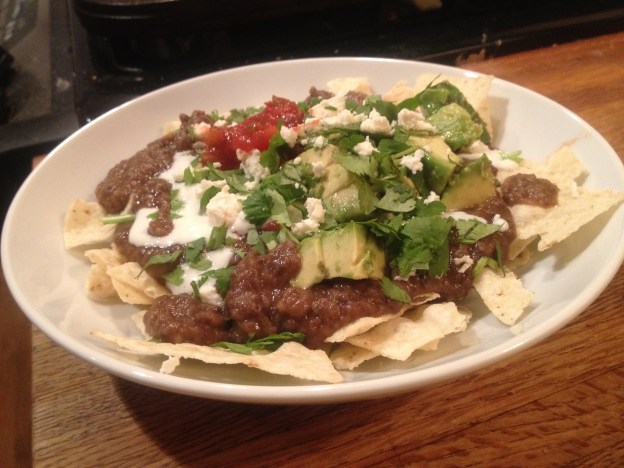
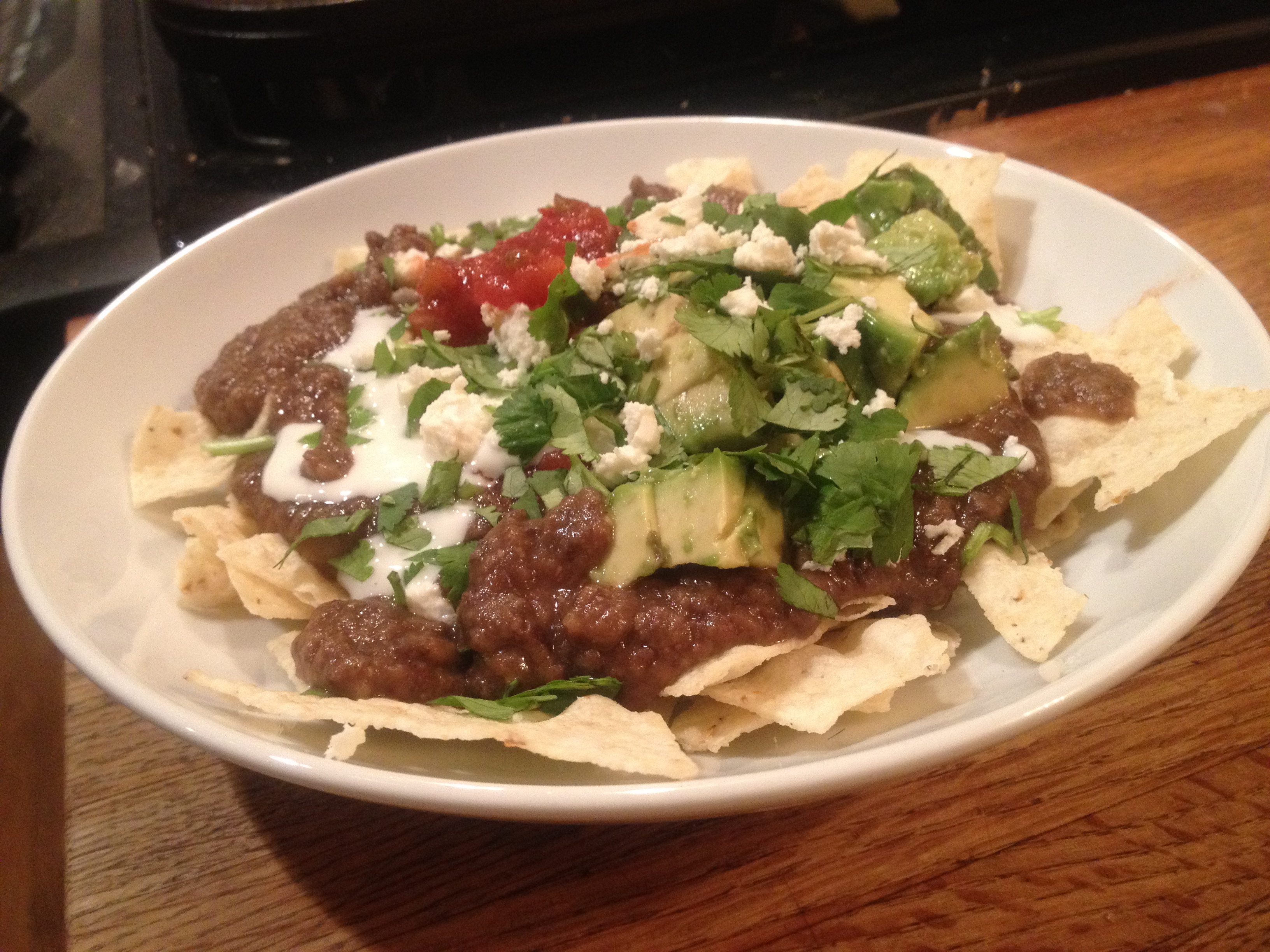
The backbone of this Chilaquiles recipe is your pot of beans.  Chop a big onion and brown it in a pot over medium-high heat.  When the onion gets a few shades past golden brown, mix in 5 minced garlic cloves and 1-2 tsp. chipotle puree. Notice that your kitchen is starting to smell great.  Add 4 cups cooked or canned black beans (if you cooked the beans yourself, add the liquid.  If they’re canned, drain and rinse them).  Add enough additional water to nearly cover the beans.  Add 1/2 to 1 1/2 tsp. salt (depending on whether the the beans are already salted) and simmer for about 20 mins to blend the flavors.  Puree with an immersion blender and add more salt to taste.  Serve with tortilla chips and assorted toppings: salsas, mexican crema (or sour cream thinned with milk), diced avocado, lime wedges, queso fresco or feta cheese and chopped cilantro.  The photo above also shows a bowl of pickled onions and hot peppers I had left over from making fish tacos.  Everyone grabs a bowl, adds a handful of chips and a ladle of beans, then toppings to taste.  Buen provecho!