Category Archives: DIY

Granola with Pistachios, Dried Apricots, and Cardamom

Today I had a now-rare opportunity to visit my old life.  A meeting on a high-up floor of a downtown law firm with views across the city.  A conference table, a catered lunch, a laptop open in front of me, moving through bullet points on an agenda.  I was there for a good cause, a volunteer gig for an organization I love, and with some right smart and good-hearted women, but still…I was glad to leave.  I miss a some things about working (adult conversation! feeling competent! having a secretary!), and I will be glad to do it again when the time is right.  But today I just wanted to get home, snuggle my family, and make granola.

The NY Times article that accompanied this recipe was the first I ever read about making granola with olive oil.  The article is dated 2009 so, yeah, I’ve been meaning to try it for a while.  I made another olive oil granola recently that I loved, and this one was great as well.  This is a sweet granola, and you can reduce the sugar a bit if you like, but I think it’s pretty great stirred into a bowl of yogurt as is. Continue reading Granola with Pistachios, Dried Apricots, and Cardamom (click for recipe)

Baking Challah

I always like to bake  bread, but I have to admit that I have special enthusiasm for the project when it’s my three year old who looks at me brightly on a Friday morning and suggests, “Mama, let’s make challah!” Yes, let’s.

I use Claudia Roden’s recipe from The Book of Jewish Food, which I like best of the challah (or “hallah”) recipes I’ve tried. The recipe as written makes four huge loaves, which seems perfectly reasonable once we devour one warm from the oven, set one or two aside to make weekend French toast, and are left with one to eat for the next week’s toast or, more generously, to give away.

Four loaves of Challah: Dissolve 2 Tbsp. dry yeast in 2 1/4 c. warm water with 1 tsp. sugar and set aside 10 minutes, or until it bubbles up.  In your biggest bowl, beat 4 eggs, then add 1 Tbsp. salt, 1/2 c. sugar, and 1/2 c. vegetable oil and beat again.  Then add the yeast mixture and beat one more time.  Gradually add enough flour for the dough to come together, 9-10 cups in all, first mixing in your bowl and then turning out on a floured surface and kneading.  Knead for about 15 minutes, having your three-year-old sprinkle the counter and dough with more flour as needed to keep the dough from getting sticky.  Stop adding flour when the dough becomes un-sticky and smooth and very enjoyable to knead.  Oil your bowl and replace the dough ball, flipping once so both sides are oiled, then cover bowl and set aside to rise for 2-3 hours, until doubled.  Punch down and knead again, then divide into 4 sections (each will become a loaf).  If you’d like to add raisins to some of your loaves, knead in a few handfuls now.  Next, shape the loaves: you can braid them (make three ropes, set them side by side, then braid outward in each direction from the middle), or you can make a round challah by rolling out a long rope and spiraling it around itself like a snail.  Move loaves to well-oiled baking sheets and leave to rise for 1 more hour, until they have doubled again.  Brush loaves gently with a bit of beaten egg, sprinkle with poppy or sesame seeds (or cinnamon sugar!) if you like, and bake at 350 for 30-40 minutes until well-browned and hollow-sounding when you tap the bottoms of the loaves. 

Whole Wheat Soda Bread Rolls

Once you have a pot of soup simmering on the stove, the only thing you need to make it a meal is a nice chunk of warm bread.  (Ok, a salad is nice too, but it’s not essential.)  I often make soda breads when I’m planning dinner on the fly because they require no rising time.  You can just mix one up and tuck it into the oven while you go about your cooking, and it will be waiting on the table when the rest of your meal is done.

These mini soda breads bake even more quickly, although they take a few moments longer to shape than a single loaf.  But the reward is a high proportion of crusty surface, begging to be broken up and slathered with butter or dunked into a steaming bowl of soup.

Mini Whole Wheat Soda Breads: In a large bowl, combine 2 c. whole wheat flour, 2 c. all purpose flour, 1 heaping tsp. salt, and 1 heaping tsp. baking soda.  Mix well.  Make a well in the center and add 2 c. buttermilk, stir to combine.  Turn out onto a floured countertop.  The dough will be shaggy, but you should be able to form it into a rough ball by kneading it just a few times (don’t knead for more than a minute).  Cut the dough into 10 wedges and shape each into a rough ball, using additional flour if necessary.  Place rounds on a floured cookie sheet, cut a deep cross in each, and brush with buttermilk if desired.  (Brushing with buttermilk will smooth the surface out and make the rolls more refined-looking, but I personally like the craggy surface that I get without additional buttermilk.)  Bake about 35 mins. at 400, or until the tops and bottoms of the rolls are crisp when tapped with a fingernail.

Looking for a soup to dunk these in?  A few recent favorites:
The Best Soup of 2011
Silky 5-Ingredient Cauliflower Soup
Split Pea Soup
Roasted Maple Squash Soup
White Bean and Spinach Soup
The Best Red Lentil Soup of 2012
Cauliflower and Cheddar Soup

Baked Sweet Potato Fries

End of the weekend.  A sweet one, full of friends, that left the kitchen a disaster.  Everyone’s gone, kids are sleeping, we’re talking in the kitchen.  I’m eating sweet potato fries.  Cold.  Off a cookie sheet.

Casually at first–there are only a few left, it seems easier than putting them away.  I absent-mindedly take another, wonder if we could just clean up next weekend instead. (Is that soon?)  Then I give the tray my full attention to peel up the last sticky, crispy, sugary bits of sweet potato.  No wonder my kids love these.

If your kids don’t get to them first, you’ll be glad to have these roasted sweet potato fries alongside a burger or sandwich of any sort, for an afternoon snack, or topping an untraditional soba or sushi rice bowl.  Or maybe, like me, you’ll find yourself eating them cold from the pan as dessert.

Baked Sweet Potato Fries: Cut sweet potatoes into batons of any size.  Place on a baking sheet and toss with olive oil and salt.  Roast at 450, checking every 10 minutes and turning them as they start to brown.  Remove when edges are crisp; smaller fries may be done before larger ones.  Total baking time depends on how thickly the sweet potatoes are cut.  Serve with ketchup, or maybe a garlicky aioli.

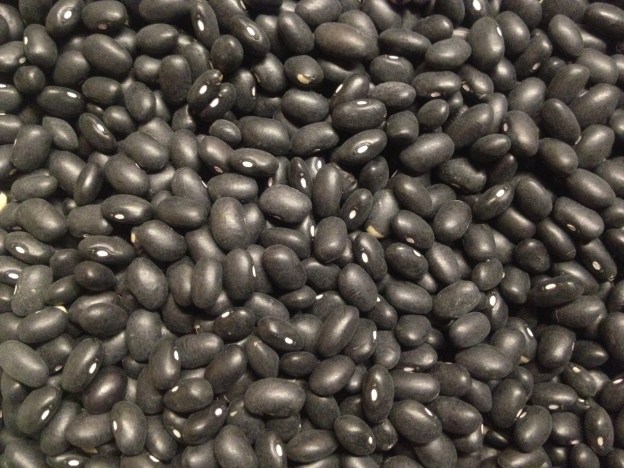
How to Cook Black Beans

Writing about cooking lately has made me reflect on the fact that we think that cooking is harder than it really is.  Take making a pot of beans.  Simple, really.  Beans, water, salt.  That pot will feed you for a long time.  Cooked beans freeze well.  Dried beans cost a fraction of what you pay for canned beans.  Canned foods, including beans, can contain unsafe levels of BPA as well as excessive sodium and preservatives.  And still–still!–it wasn’t until a few years ago that I started using dried beans almost exclusively.  It seemed like too much trouble to cook my own.

So it is with the zeal of a convert that I implore you to set aside a few hours some weekend to cook a pot of beans.  I’m not saying the canned kind are wrong, and I always keep a few cans in my pantry just in case, but there are so many good reasons to cook dried beans yourself.

Once you decide to make the leap, it’s hard to go wrong.  You can soak your beans, or not.  You can salt them as they cook, or wait until the end.  You can use this season’s beans from a crunchy co-op that has amazing dried bean turnover, or cook up the bag that’s been hiding in the back of the cupboard for years.  Despite the vast number of opinions on each of these topics, in my experience you can tune all that out and your beans will turn out just fine.

Ready?  Good.  First, keep an eye on your beans as you take them from the bag or jar to make sure that there are no little rocks mixed in.  Second, measure them out so you have an idea of how much salt to add later.  Finally, give them a good rinse before putting them into your pot.

I like to soak my beans only because it speeds the cooking time on the stove (and thus the actual supervision required).  You can soak your beans covered by a few inches of water overnight, or you can “quick soak” them: put them in a pot, bring it to a full boil for one minute, then turn off the heat and leave your covered pot alone for an hour.  At this point you can drain the beans, or not.  (Some claim that draining the water after an initial soak helps make the beans more digestible.  Others say you’re just pouring valuable nutrients down the drain.  No worries.  Your beans will be great either way.)

So now your black beans (soaked or unsoaked) are in your pot.  Cover the beans with a few inches of water.  (This can be the soaking water if you soaked the beans, or new water.)  Bring the pot to a boil for a few minutes, skimming off any foam that gathers, then reduce the heat to a simmer.  At this point you can leave the beans completely plain, or add any additional flavorings you’d like: some chopped onion, chopped jalapenos, dried epazote, dried oregano, crushed garlic cloves, chopped cilantro stems, whatever.  I usually make my beans rather plain, then add more flavorings later.  Leave the simmering pot partially or fully covered.  Cook for at least half an hour if you soaked the beans, or an hour if you didn’t, then taste a bean.  Once they begin to soften, add about 3/4 tsp. salt per cup of dried beans that you started with.  Continue cooking until beans are completely soft.  This may take two hours or more if you are using unsoaked beans.  (The cooking time will vary according to the beans’ freshness; even soaked beans can take nearly two hours if they are quite old.)  If the water seems to be getting low, add more boiling water.  If there is too much water when the beans are done, pour some off.  Taste the beans as you go.  If they don’t taste great to you, they probably need more salt.  Add a small amount at a time and simmer for a few minutes to let it soak in before tasting again.

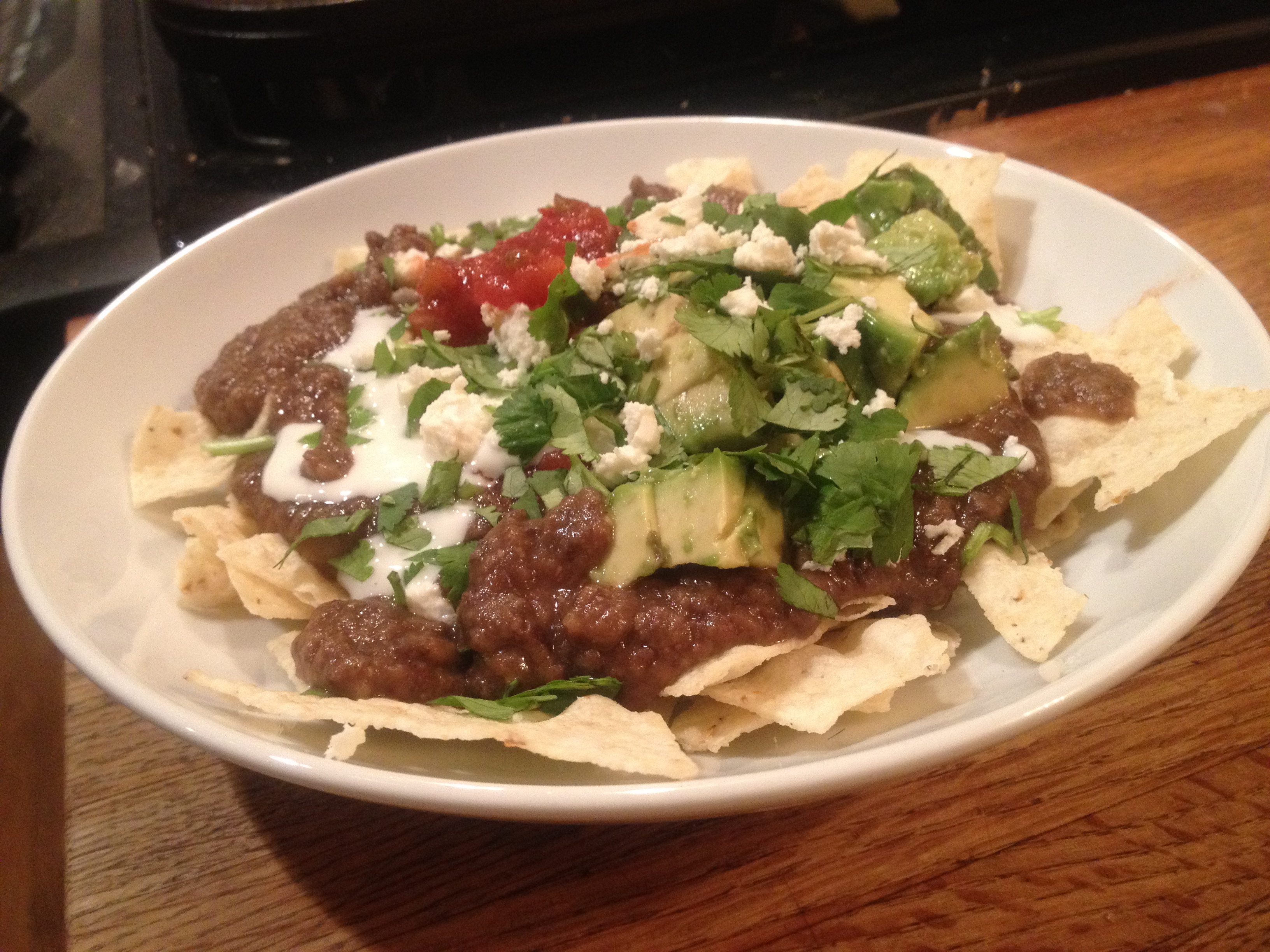
Looking for ideas to use up your delicious pot of black beans?  Mix with rice, top with salsa and it’s dinnertime.  Or click the “Mexican Flavors” link on the sidebar for emmycooks recipes (like maybe these chilaquiles?) that await your black beans with open arms.Some Recipes to Show Off your Black Beans:

Black Beans with Cilantro and Lime
Chilaquiles
Vegetarian Taco Salad
Quinoa Chili with Red Peppers
Enchilada Bake with Black Beans and Tofu
Huevos Rancheros
Winter Wheat Berry Chili
Southwestern Frittata with Peppers, Black Beans, and Cheddar
Black Bean Tacos

Quick Whole Wheat Spice Bread with Brown Sugar, Orange Zest and Walnuts

This afternoon, as my five year old drifted off to napland, she  opened her eyes to dreamily ask, “Mommy, after my nap, can I have TWO MORE PIECES of that bread you made, with butter?”  I smiled and nodded, and she was fast asleep.  Inspiring that kind of delight is the best reward a cook can hope for, in my book.

It’s lucky that this recipe makes two loaves of bread, because my family started  hovering around the cooling rack the moment the bread came out of the oven.  The source of this recipe, Cheryl Sternman Rule (writer of this lovely blog), calls it “Toasting Bread.”  She advises you to cool the bread completely before slicing,  toasting, and spreading it with honey butter.  I am here to tell you that the “letting it cool” part will be very difficult.  We could not withstand the siren scent and ate most of the first loaf warm, slathered in salted butter.  It was heavenly.  Lest it appear that I am contradicting Ms. Rule, however, I should add that the loaf we could bear to let cool was indeed delicious toasted.Quick Whole Wheat Spice Bread with Brown Sugar, Orange Zest and Walnuts: Grease two loaf pans well with softened butter.  Whisk an a egg in large bowl, then whisk in 3 Tbs. honey, 1 c. dark brown sugar and 1 1/2 c. milk.  Zest two oranges directly into the bowl.  Trade your whisk for a wooden spoon or spatula and stir in the dry ingredients: 2 c. whole wheat flour, 2 c. all-purpose flour, 3/4 tsp. ground cloves, 1/2 tsp. salt, and 4 tsp. baking powder.  Mix well, then add 1 c. chopped walnuts and mix again.  Divide batter between your two prepared pans.  Bake at 350 for 45-50 minutes, until a toothpick tester comes out clean.  Remove from pans and cool on a rack.  Hover over the bread, inhaling deeply, resisting as long as you like, then serve toasted (or still warm) with butter.


Savory Shortbread: Parmesan and Black Pepper Crackers

My grandfather is visiting me in Seattle this week along with my parents.  He is 98 and just the way I hope to be if I am ever that age.  Fit, happy, and he always has something nice to say about everyone and everything.  And he is something of a gourmand.

We are four generations under one roof when everyone is home, and I try to be mindfully grateful for this time together.  But while one half of my brain is enjoying the sight of my grandfather laughing at my baby’s hysterical giggles, the other half is thinking ahead to happy hour.

Happy hour was a religious observance in my grandparents’ home.  Five o’clock?  Drinks magically appeared, ice cubes tinkled in glasses, salty snacks graced the coffee table, everyone stopped what they were doing and came together.  Time has not diminished my grandfather’s appreciation of this ritual, and why should it?  It’s never a bad idea to wind down your day with a tasty beverage and the people you love.

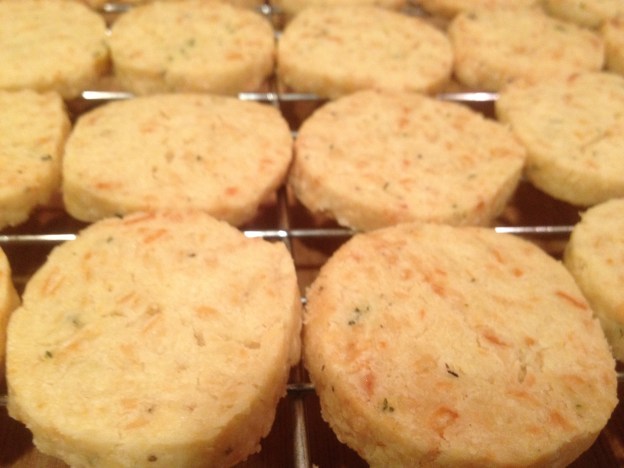
These crackers, really a savory shortbread, are perfect cocktail hour fare.  I’ve also made my grandpa those rye crackers, of course.  This recipe is Ina Garten’s.  You need to allow at least 30 minutes to chill the log of dough, or you can make the dough ahead of time, freeze it for a month or two and then just let it defrost slightly before slicing and baking.Parmesan and Black Pepper Crackers: Start by softening a stick of butter in your mixer.  Add 3/4 c. grated Parmesan, 1 1/4 c. flour, 1 tsp. fresh thyme leaves, 1/4 tsp. kosher salt, and 1/2 tsp. freshly ground black pepper.  Mix again.  If the dough is too dry (if it doesn’t form crumbs when pinched together), mix in a few spoonfuls of water or milk.  Turn the dough out onto a piece of plastic wrap, shape into a 13″ log, wrap well and freeze for 30 minutes.  Slice about 1/4″ thick and bake on an ungreased cookie sheet at 350 for 20-25 minutes, until the crackers begin to turn golden brown.  Cool completely on a wire rack.  Serve at happy hour.

Homemade Rye Crackers with Apricot-Chevre Spread

Welcome to Emmy Cooks!  You can see some of my favorite recent recipes by clicking the “My Favorite Recipes” category on the sidebar (here are June, July, and August).  If you like what you see here, you can sign up on the sidebar to receive a daily recipe by email, or follow Emmy Cooks on Facebook, Twitter, or Pinterest.

I buy a lot of foods in bulk from my local co-op.  I think they are cheaper and maybe fresher that way, with much less wasted packaging.  But I never considered a benefit that I was missing out on when I skip the packaging: the recipes on the back of the bag!

Circumstances (read: laziness, since I didn’t want to make an extra grocery stop) recently required me to pick up an already-packaged bag of Bob’s Red Mill Dark Rye Flour.  I like to have rye flour on hand because I use it in my pizza dough and in bread, and someone recently made me delicious Finnish rye cookies that I want to try out soon.  And that’s how I discovered these rye crackers.

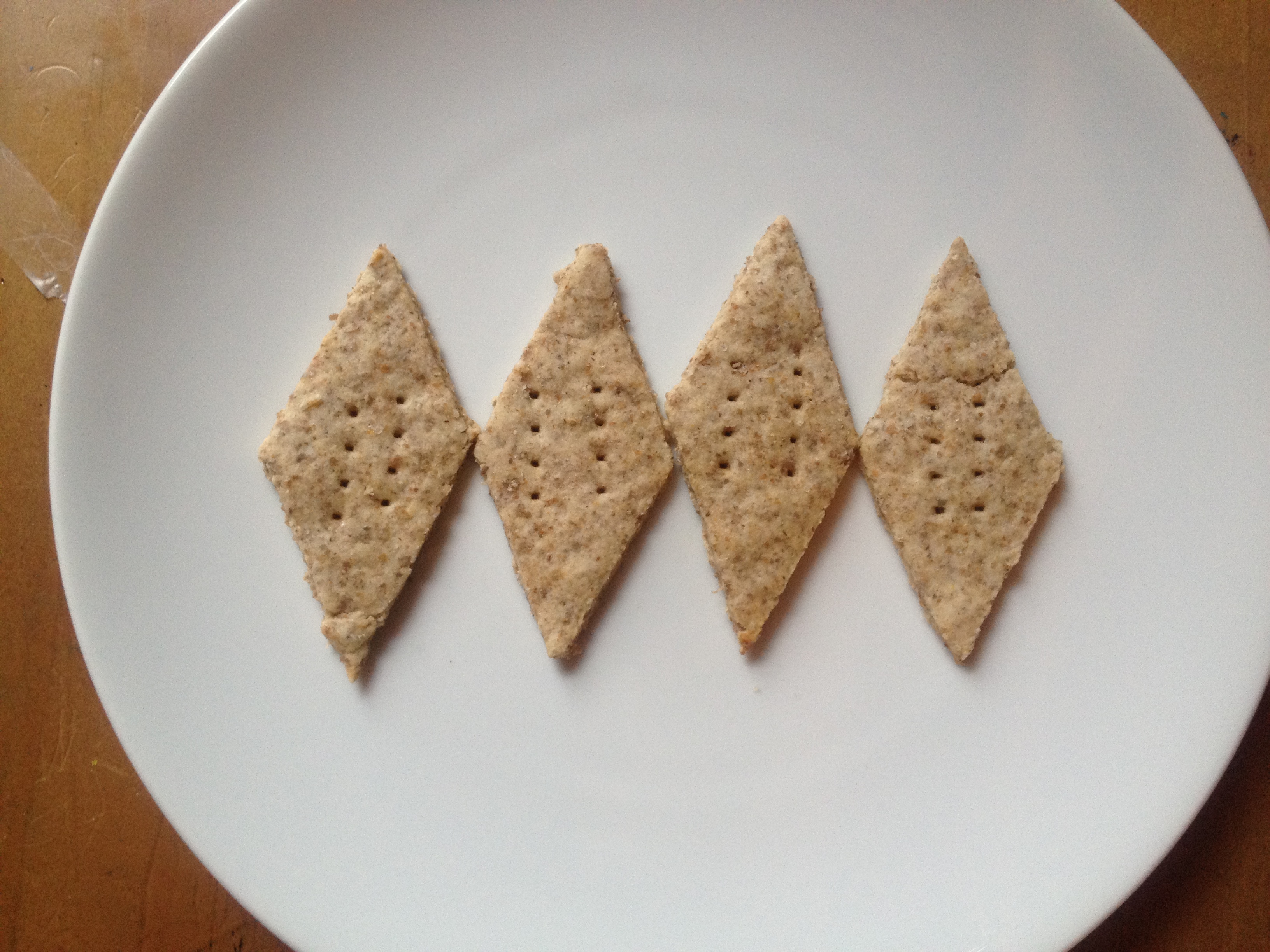
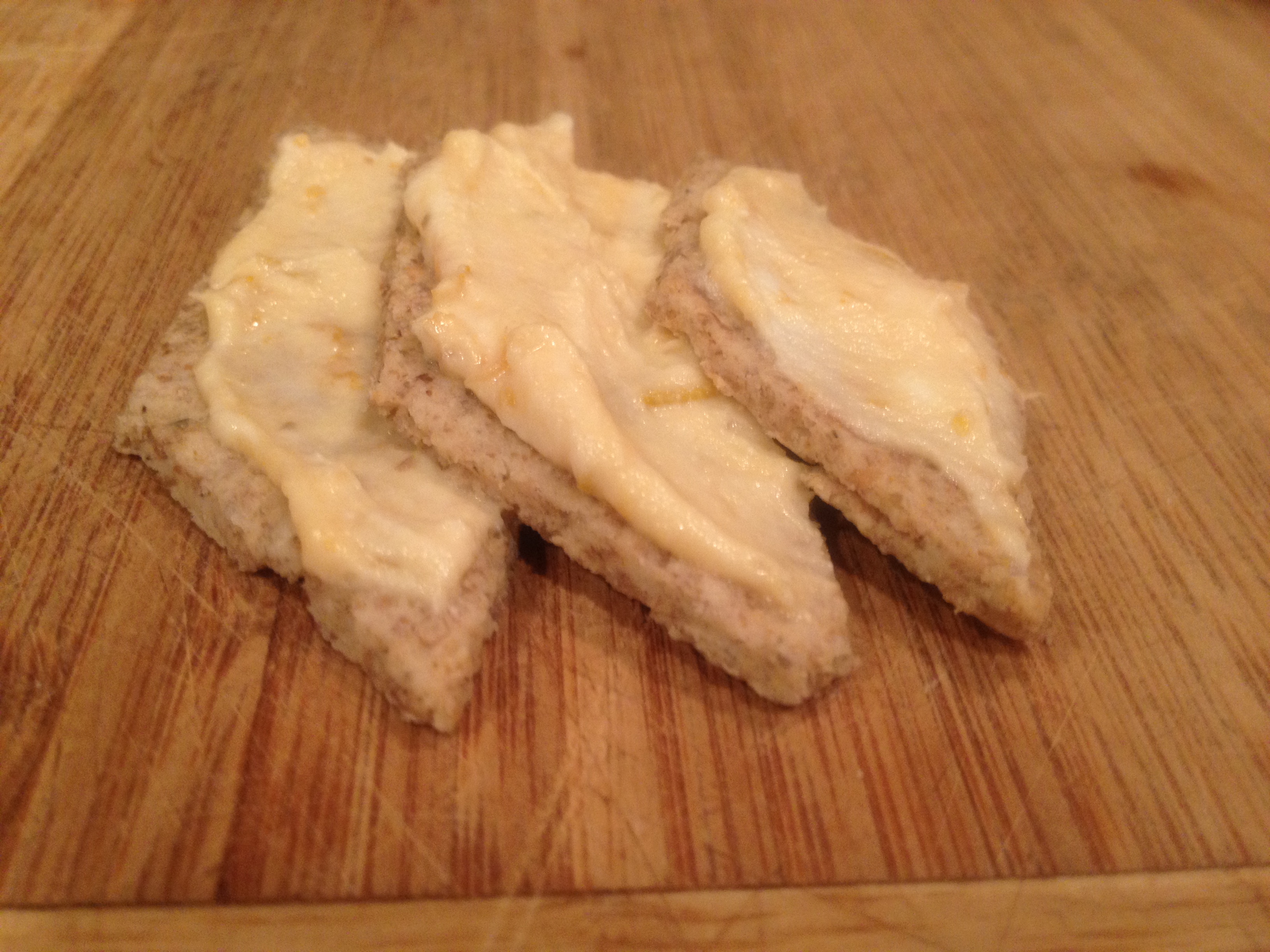
This recipe is straight from the back of the Bob’s Red Mill bag.  The crackers are thin and crisp and make a lovely little snack by themselves.  I can imagine serving them alongside a big bowl of cabbage and white bean soup.  But today we ate them in the early evening, topped with a jammy smear of apricot-chevre spread, with a glass of sparkling wine and some good friends.  I thought the combination was rather nice, myself.

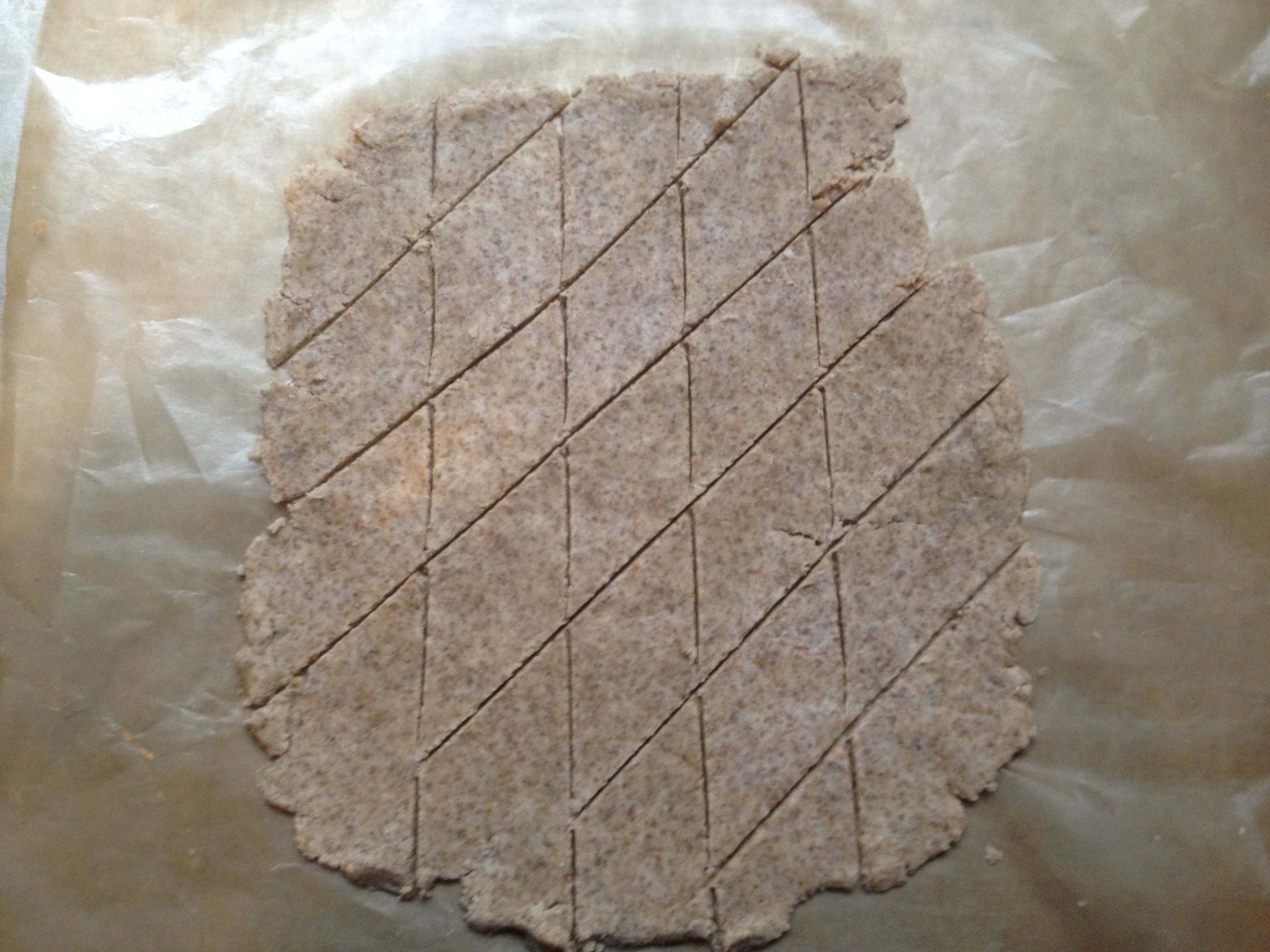
To make Rye Crackers: In a medium bowl, mix 1/2 c. all-purpose flour, 1/2 c. rye flour, 1/2 tsp. salt, 1 Tbsp. Turbinado sugar, 1 tsp. baking powder and 2 tsp. caraway seeds.  Add 4 Tbsp. butter and work into the dough until crumbly (I recommend using your hands to pinch and rub the butter into the dry ingredients).  Stir in 3 Tbsp. milk.  Form dough into two balls and roll each out to 1/8-1/16 inch thickness between two sheets of waxed paper.  Cut into desired shapes and prick with a fork.  Bake at 400 degrees on ungreased cookie sheets for 5-8 mins (depending on how thin you rolled them) until edges begin to brown.  Cool on rack and, in the unlikely event that you have leftovers,  store them in an airtight container.

We enjoyed these crackers with an apricot-chevre spread, which was simply a few good spoonfuls of homemade apricot jam stirred into a few oz. of soft goat cheese.  I’m sure they’d also be good with a sharp cheddar, soft havarti, or blue cheese.

Say What You Mean With Homemade Conversation Hearts

I have to start with a few confessions here.  One: This may be the farthest thing from “real food” that will ever grace these pages.  Two: Making homemade conversation hearts is about ten times more cutesy than I am in real life.  Three: Even though I’m trying to play it cool, I secretly had so much fun making these with my three year old.

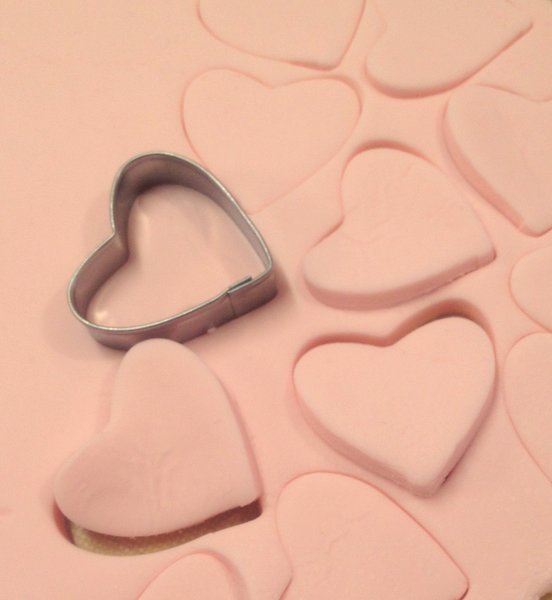
There are, I suppose, a few good reasons to make your own Valentines Day conversation hearts, especially if you happen to have time to kill and an enormous quantity of powdered sugar on your hands.  The boxed kind have no fewer than five unrecognizable ingredients.  They taste awful.  And they say things like “text me” these days.  Wouldn’t you rather personalize yours with a message like “Marry Me” or “I think we should just be friends”?Conversation Heart Cutouts emmycooks.comEasy peasy.  Enter homemade conversation hearts.  I have quite a fondness for the CakeSpy cookbook Sweet Treats for a Sugar-Filled Life, which inspired this wacky project.  And it was easier than I thought it would be.

Please note that if you are going to get crazy and make these, you should start ASAP.  The hearts need to dry for 24 hours before you can write on them.

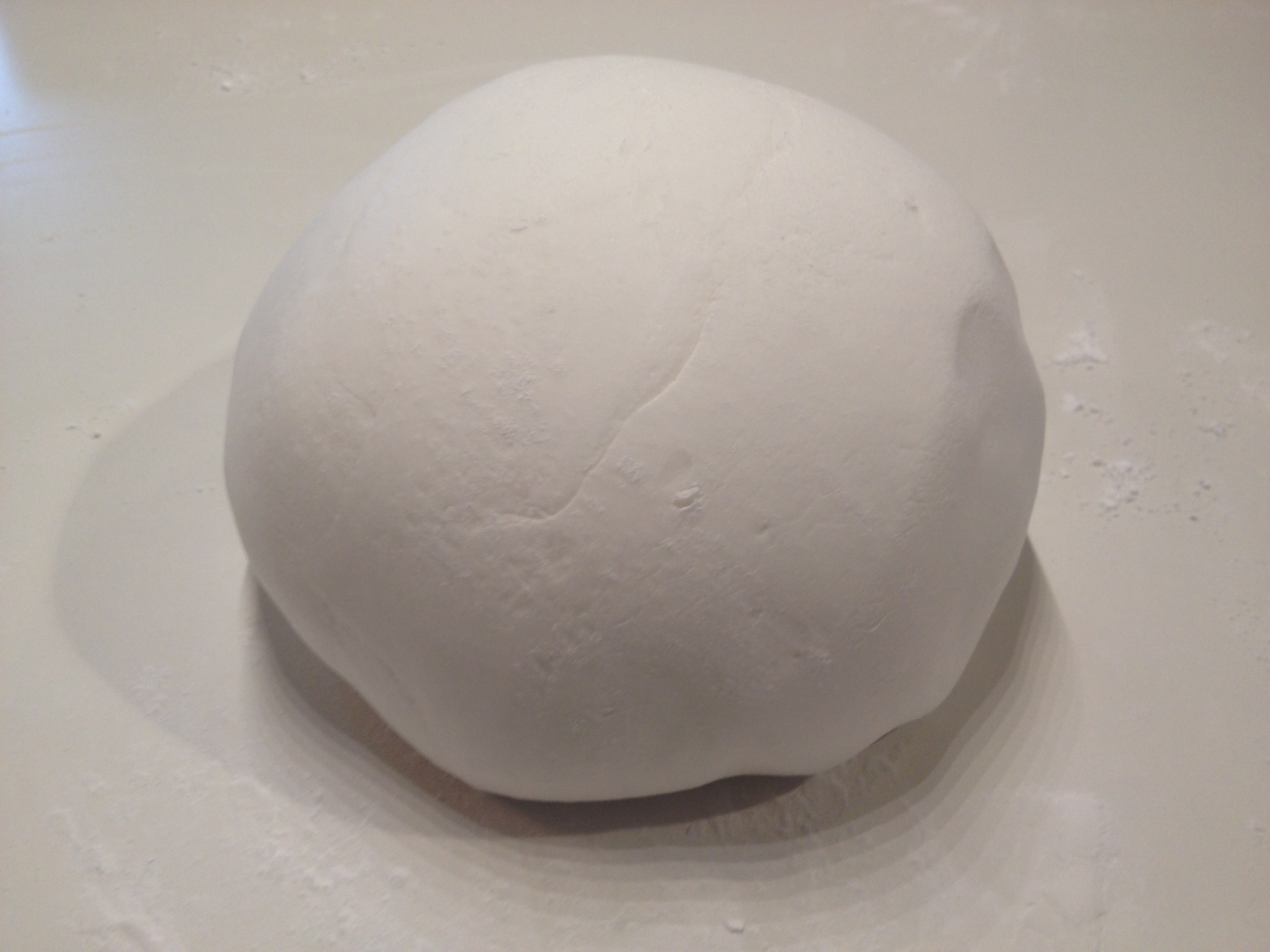
DIY Conversation Hearts start with a small bowl, in which you combine 1/2 c. water, 2 tsp. light corn syrup, and 1/4 oz. powdered gelatin.  Whisk well, microwave for 30 seconds, then whisk well again.  Dump mixture into the bowl of your mixer with 1 c. powdered sugar (in case you’re shopping, I used almost 2 1/2 lbs. powdered sugar in all).  Turn mixer on low and slowly incorporate 2 lbs. powdered sugar, scraping the bowl down occasionally.  Turn your sticky dough out onto a surface heavily dusted with MORE powdered sugar and knead like bread dough, adding more powdered sugar as you go, until the dough is satiny rather than sticky.

Divide the dough into as many colors as you want, and knead a few drops each of food coloring and flavoring (I used almond extract) into each ball.  This step is messy; I lined my counter with parchment paper to avoid staining.  I also added more powdered sugar as I worked in the liquid color and flavor.

Roll the dough out 1/8-1/4 inch thick.  Use heart -shaped cutters (I used a set of fondant cutters) to make tiny or almost-tiny hearts.  (Smaller = more realistic. Bigger = easier to write on.)  Pinch the scraps back together and re-roll.  The original recipe said it would make 100 hearts, but it actually made a gazillion.  Really.  More than 500.

Let the hearts dry on parchment paper for 24 hours, then use food coloring markers (like Gourmet Writer Food Pens) to ink the hearts with Valentines messages that express your own true self.  If that means writing “text me,” so be it–at least the recipient will know that you really mean it.

Conversation Heart Scraps emmycooks.com

Eat Your Greens: Easy Handmade Spinach Pasta

Sometimes, as a threat, I tell my children that there were times, like maybe in the 1950s, when children weren’t even allowed INTO the kitchen.  They had to PLAY OUTSIDE until dinner was ready.  They did not ever get to help cook, and they CERTAINLY were not allowed to gambol about the cook’s feet or play frisbee with the tupperware lids to entertain the baby.  My children stare at me, slack-jawed and wide-eyed.  Being banned from the kitchen is as bad a fate as they can imagine.

In fact, many evenings when I head into the kitchen to start thinking about dinner, they beat me there, pulling their stepladders up to the counter.  “How can we help?”  They measure as we bake, pile cut veggies onto the tray to roast, push the buttons on the machines.  They find the pots, help set the table, and enthusiastically stir clouds of flour and glops of sauces right onto the floor.

So when my little chefs make a dinner request, I like to indulge them.  The other night my five year old requested stracci di pasta.  Actually, what she said, with a bordering-on-maniacal gleam in her eye, was “Mama, can we make that pasta where we get to cut it up by ourselves WITH A SHARP KNIFE?”  (Sharp knives–even not VERY sharp knives–are exciting to the preschool set.)  Indeed we could.

Homemade egg pasta is actually very easy if you have a pasta roller.  If you don’t, forget it, borrow a friend’s and then come back for the recipe.  We made ours with spinach both for the emerald color and because I want my kids to cook with and eat vegetables on purpose (as opposed to only hidden-in-their foods veggies, which seems to be a trend).  This recipe, like many of my favorites, started its life in Deborah Madison’s Vegetarian Cooking for Everyone.

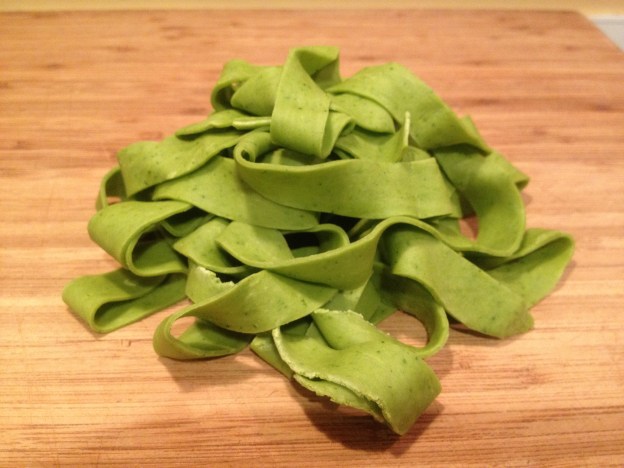
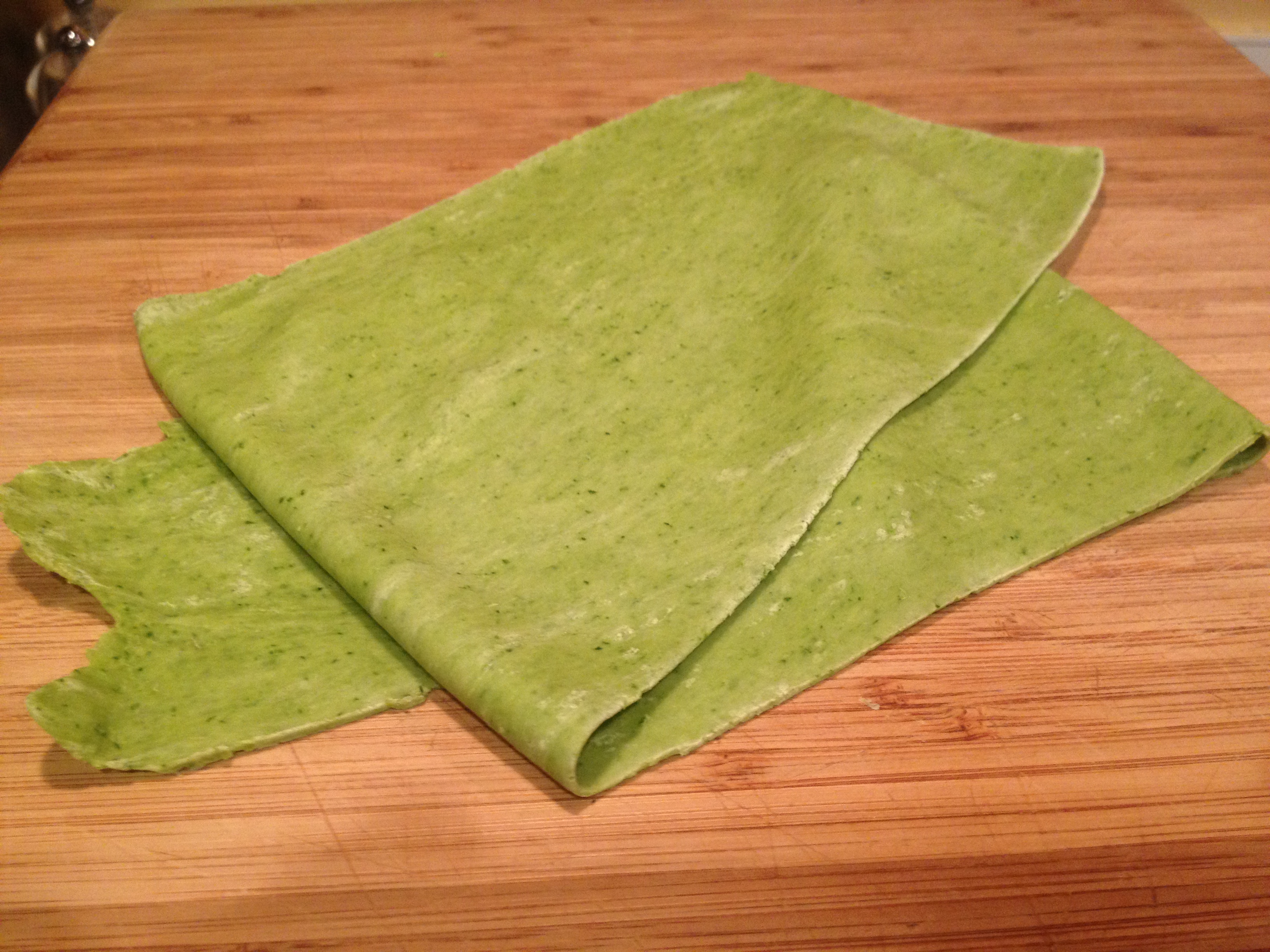
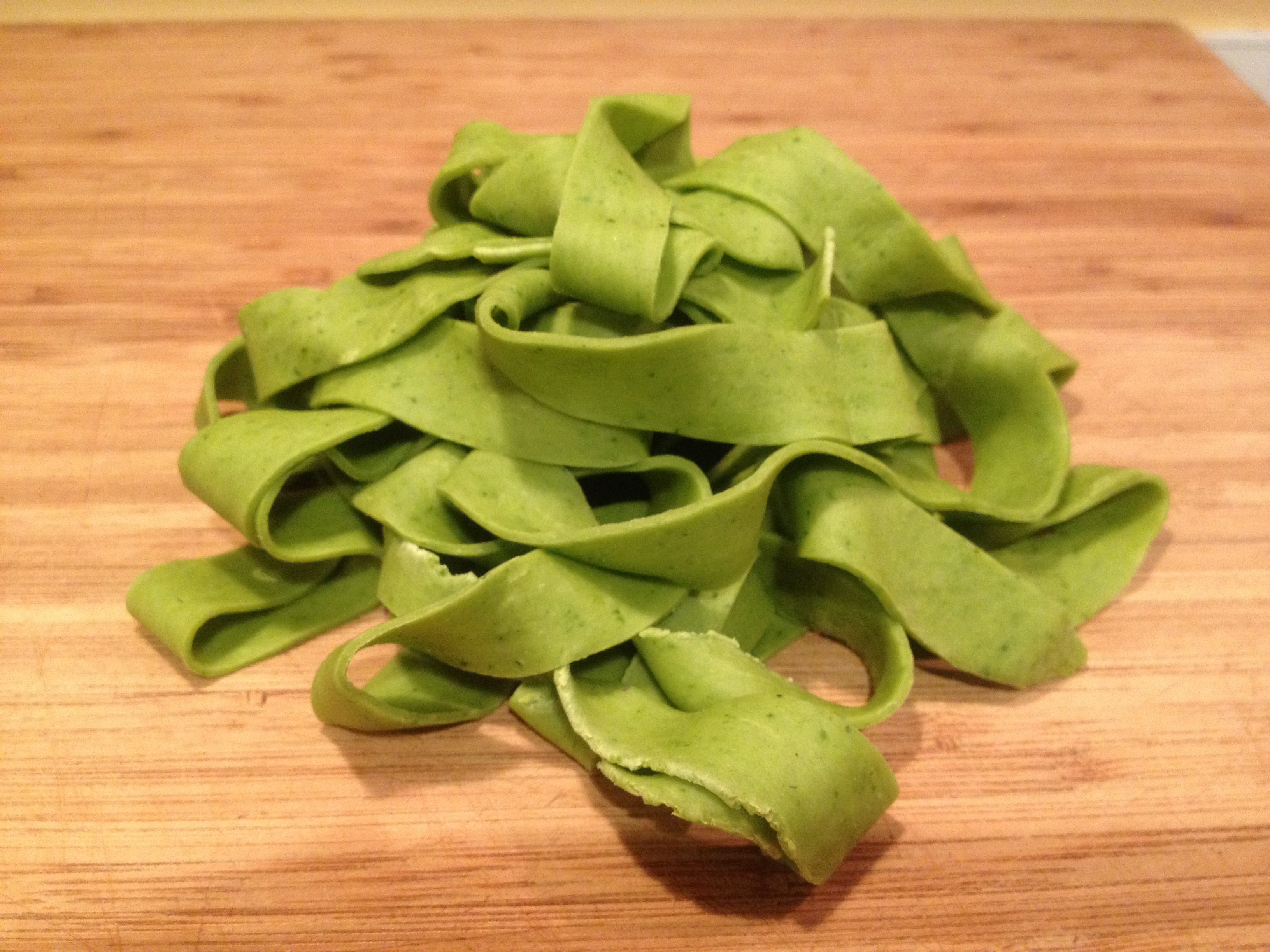
Fresh Spinach Pasta starts with two c. lightly packed spinach leaves blended with two eggs until liquid.  Mix 2 c. flour with 1/4 tsp. salt in a mixer/food processor/bowl then add the liquid while stirring or mixing on low speed.  The dough will be quite crumbly but if it is unworkably dry or sticky you can adjust with a spoonful of water or flour.  Turn out onto a cutting board and knead until smooth.  Cover and let rest 15 minutes.  Cut dough into 4-6 pieces and flatten each into a rough rectangle.  Set your pasta roller to the widest setting and roll the dough through, then fold in half or thirds and roll again to continue kneading the dough.  Do this a few times, then stop folding and start thinning out the dough by running it through the machine on progressively thinner settings.  When your pasta is suitably thin, repeat with remaining dough.  Let your kids cut the pasta into stracci (“little rags”), or fold it as shown and slice into noodles.  (If the pasta seems at all sticky, flour it lightly for this step.)  Pull apart into a pile of noodles and toss with a few pinches of flour to keep the noodles from sticking.  Cook in a boiling pot of salted water for a few minutes, tasting as you go (cooking time will depend on the thickness of your pasta).

We drained our pasta and tossed it into a pan of puttanesca-style sauce: olive oil, garlic, capers, tomatoes, red pepper flakes, dried oregano, and a few more handfuls of spinach.