Tag Archives: family

Purple Potato Frittata, with or without Cod

Are you a sweet or savory breakfast person?  I like both.  (Sometimes at the same time.)  But in spite of having a huge sweet tooth, the savory breakfast usually trumps for me.

Either way, you’re covered this weekend.  If you’re a sweet person, you have that French toast to make.  And if savory is your thing, here’s the plan.

Pick some potatoes.  I know I’m being a little preachy here, but let me just gently suggest that if you have never bought a potato from your winter farmers’ market, you should give it a try.  I buy plenty of supermarket produce in addition to supporting my local farmers when I can, but there are a few things that are just so much more flavorful when I buy them from the farmers’ market that they seem like different vegetables.  Potatoes are one of those things.  But I should also say that I am no potato snob.  Potatoes are one of my favorite foods and I always have a 5 lb. bag of grocery store potatoes lurking in the basement just in case.  (Is that weird?)  And I love them.  Just like I love the even more flavorful fancy ones.

I had a bag of purple potatoes.  You can use whatever potatoes you have or choose to acquire.

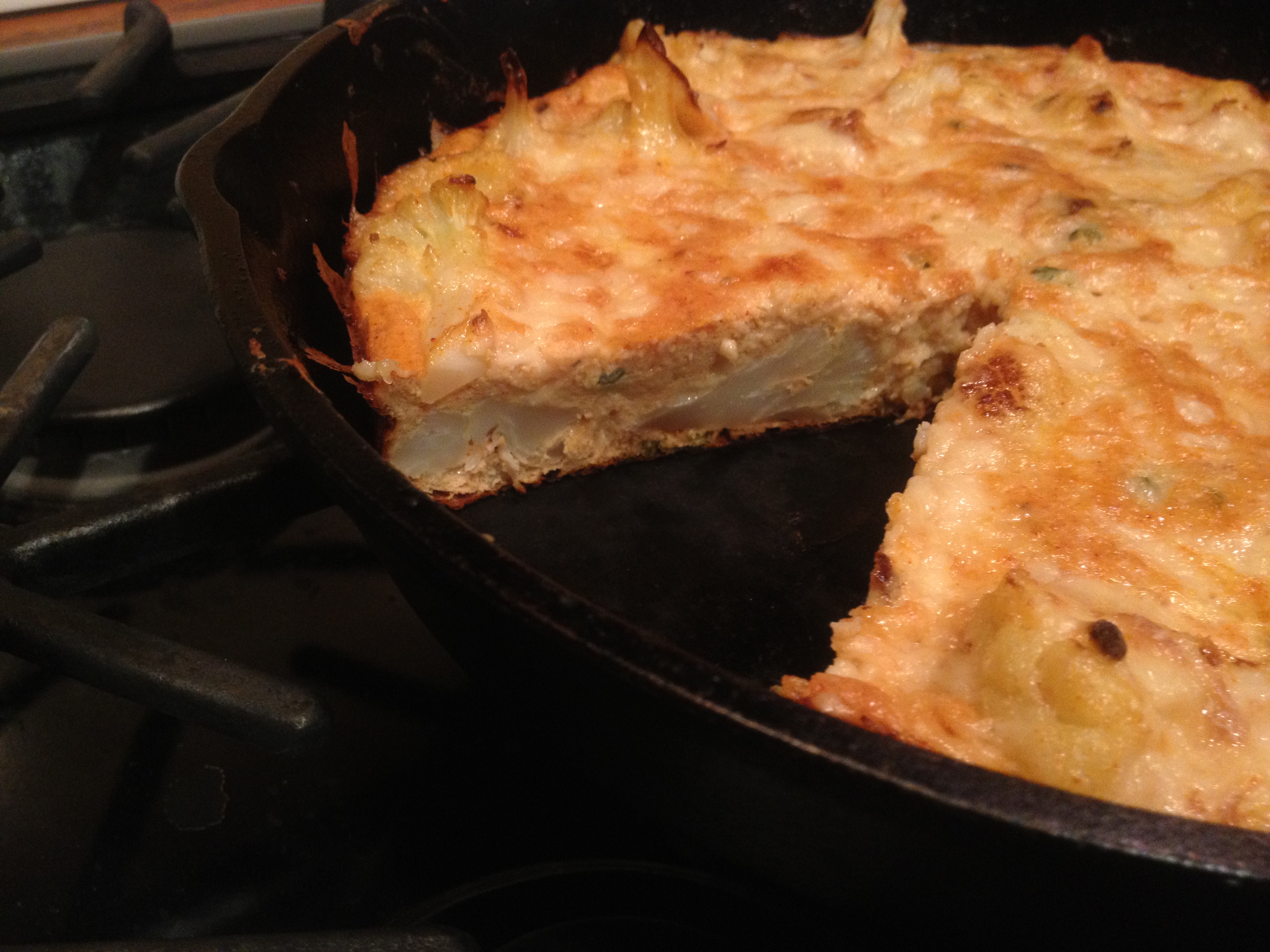
This is a riff on the Smoky Cauliflower Frittata to the extent that I used the smoked paprika and smoked cheese combo again.  I was using up leftover baked cod, but I think this recipe would also be great if you used a smoked fish instead and left out the paprika.  Or you can leave the fish out altogether, of course.  We roll with a lot of vegetarians, so we made one frittata with the fish and one without.Purple Potato Frittata, with or without Cod: Dice a few potatoes into small cubes and saute in olive oil over medium high heat with a large diced onion until the potato is edibly tender.  Meanwhile, whisk 6 eggs with 1/4 c. Greek yogurt, 2 tsp. smoked paprika and salt and pepper.  Mix two handfuls of smoked cheese and one of sharp cheddar into the eggs, along with the cooked potato and onion mixture.  Flake some cooked or smoked fish into the bowl if you’re using it.  Mix gently to combine everything.  Heat a little more oil in the same pan you used to cook the potatoes, then pour in the egg mixture and cook about 5 minutes over medium heat until the edges are set.  Scatter one last handful of cheese on top of the eggs.  Transfer to the oven and bake at 375 for another 10-12 minutes, until nearly set, then turn on the broiler for a carefully attended minute or two to brown the top.  Serve with toast and fruit for breakfast, or with a salad for any other meal.

French Toast with Vanilla and Orange Zest

I hope that you have some loaves of challah in the oven or the bread box, because you are going to want to make this French toast this weekend.  Lots of the recipes I have posted here are old favorites, but this one is a new favorite.  It’s Ina Garten’s recipe but Sonia made it for me recently, and then I made it again, and frankly, it’s the reason we’ll be baking challah again tomorrow.

Vanilla.  Orange Zest.  Crisp, buttery edges.  Custardy centers.   A drizzle of pure maple syrup, a tumble of fruit, a steaming mug of coffee.  Weekend mornings don’t get better than this.

French Toast with Vanilla and Orange Zest:  In a wide bowl or pan, whisk 6 eggs with 1 1/2 c. milk, 1 Tb. honey, 1/2 tsp. vanilla, 1/2 tsp. kosher salt, and the zest of one orange.  Soak 3/4 inch slices of challah for 5 minutes, turning once.  Cook in plenty of butter over medium heat until nicely browned on each side (meanwhile, get the next batch of bread soaking in the egg mixture).  Transfer to a 250 degree oven while you cook the remaining slices.  Serve with maple syrup and fruit.

Baking Challah

I always like to bake  bread, but I have to admit that I have special enthusiasm for the project when it’s my three year old who looks at me brightly on a Friday morning and suggests, “Mama, let’s make challah!” Yes, let’s.

I use Claudia Roden’s recipe from The Book of Jewish Food, which I like best of the challah (or “hallah”) recipes I’ve tried. The recipe as written makes four huge loaves, which seems perfectly reasonable once we devour one warm from the oven, set one or two aside to make weekend French toast, and are left with one to eat for the next week’s toast or, more generously, to give away.

Four loaves of Challah: Dissolve 2 Tbsp. dry yeast in 2 1/4 c. warm water with 1 tsp. sugar and set aside 10 minutes, or until it bubbles up.  In your biggest bowl, beat 4 eggs, then add 1 Tbsp. salt, 1/2 c. sugar, and 1/2 c. vegetable oil and beat again.  Then add the yeast mixture and beat one more time.  Gradually add enough flour for the dough to come together, 9-10 cups in all, first mixing in your bowl and then turning out on a floured surface and kneading.  Knead for about 15 minutes, having your three-year-old sprinkle the counter and dough with more flour as needed to keep the dough from getting sticky.  Stop adding flour when the dough becomes un-sticky and smooth and very enjoyable to knead.  Oil your bowl and replace the dough ball, flipping once so both sides are oiled, then cover bowl and set aside to rise for 2-3 hours, until doubled.  Punch down and knead again, then divide into 4 sections (each will become a loaf).  If you’d like to add raisins to some of your loaves, knead in a few handfuls now.  Next, shape the loaves: you can braid them (make three ropes, set them side by side, then braid outward in each direction from the middle), or you can make a round challah by rolling out a long rope and spiraling it around itself like a snail.  Move loaves to well-oiled baking sheets and leave to rise for 1 more hour, until they have doubled again.  Brush loaves gently with a bit of beaten egg, sprinkle with poppy or sesame seeds (or cinnamon sugar!) if you like, and bake at 350 for 30-40 minutes until well-browned and hollow-sounding when you tap the bottoms of the loaves. 

Whole Wheat Soda Bread Rolls

Once you have a pot of soup simmering on the stove, the only thing you need to make it a meal is a nice chunk of warm bread.  (Ok, a salad is nice too, but it’s not essential.)  I often make soda breads when I’m planning dinner on the fly because they require no rising time.  You can just mix one up and tuck it into the oven while you go about your cooking, and it will be waiting on the table when the rest of your meal is done.

These mini soda breads bake even more quickly, although they take a few moments longer to shape than a single loaf.  But the reward is a high proportion of crusty surface, begging to be broken up and slathered with butter or dunked into a steaming bowl of soup.

Mini Whole Wheat Soda Breads: In a large bowl, combine 2 c. whole wheat flour, 2 c. all purpose flour, 1 heaping tsp. salt, and 1 heaping tsp. baking soda.  Mix well.  Make a well in the center and add 2 c. buttermilk, stir to combine.  Turn out onto a floured countertop.  The dough will be shaggy, but you should be able to form it into a rough ball by kneading it just a few times (don’t knead for more than a minute).  Cut the dough into 10 wedges and shape each into a rough ball, using additional flour if necessary.  Place rounds on a floured cookie sheet, cut a deep cross in each, and brush with buttermilk if desired.  (Brushing with buttermilk will smooth the surface out and make the rolls more refined-looking, but I personally like the craggy surface that I get without additional buttermilk.)  Bake about 35 mins. at 400, or until the tops and bottoms of the rolls are crisp when tapped with a fingernail.

Looking for a soup to dunk these in?  A few recent favorites:
The Best Soup of 2011
Silky 5-Ingredient Cauliflower Soup
Split Pea Soup
Roasted Maple Squash Soup
White Bean and Spinach Soup
The Best Red Lentil Soup of 2012
Cauliflower and Cheddar Soup

Cauliflower and Cheddar Soup

There was a thoughtful post today on The Yellow House that asked whether cooking has become so fetishized that it has begun to seem inaccessible to home cooks.  It reminded me of the brouhaha over models’ bodies: if you see too many airbrushed glossy spreads, do you forget what normal looks like, and maybe start to doubt yourself for not looking so perfect?  I don’t think it’s crazy to think that TV cooking shows and perfect Pinterest culinary glamshots might similarly intimidate novice or busy home cooks.

For my part, I try to remember that it can be easy to get nourishing food on the table quickly, and I try not to let the perfect be the enemy of the good.  Use what you have. Make it easy for yourself.  While I have been trying to include a few photos of my recipes so you know what you’re getting yourself into, none of the food we love to eat is magazine-good-looking aside from the natural beauty of vegetables themselves.  And if I zoomed out, most days you’d see photos that look a bit like Mama Nervosa’s This Is Not A Lifestyle Blog series.

Home cooking is messy and sometimes unglamorous.  Home cooks don’t use mise en place unless everything has to go into the pan at the same instant.  We’re clearing space for the cutting board on messy counters.  And we sure don’t have dishwashers tidying up after us as we go.  If you’re me, you might even burn three separate pots in one night trying to make one simple soup.  (First: the butter.  Second: the onions.  Third: half the croutons.)  Oh, well.  Luckily I only set the fire alarm off once.  To enjoy home cooking is to embrace these moments and circumstances.

And the soup was delicious.

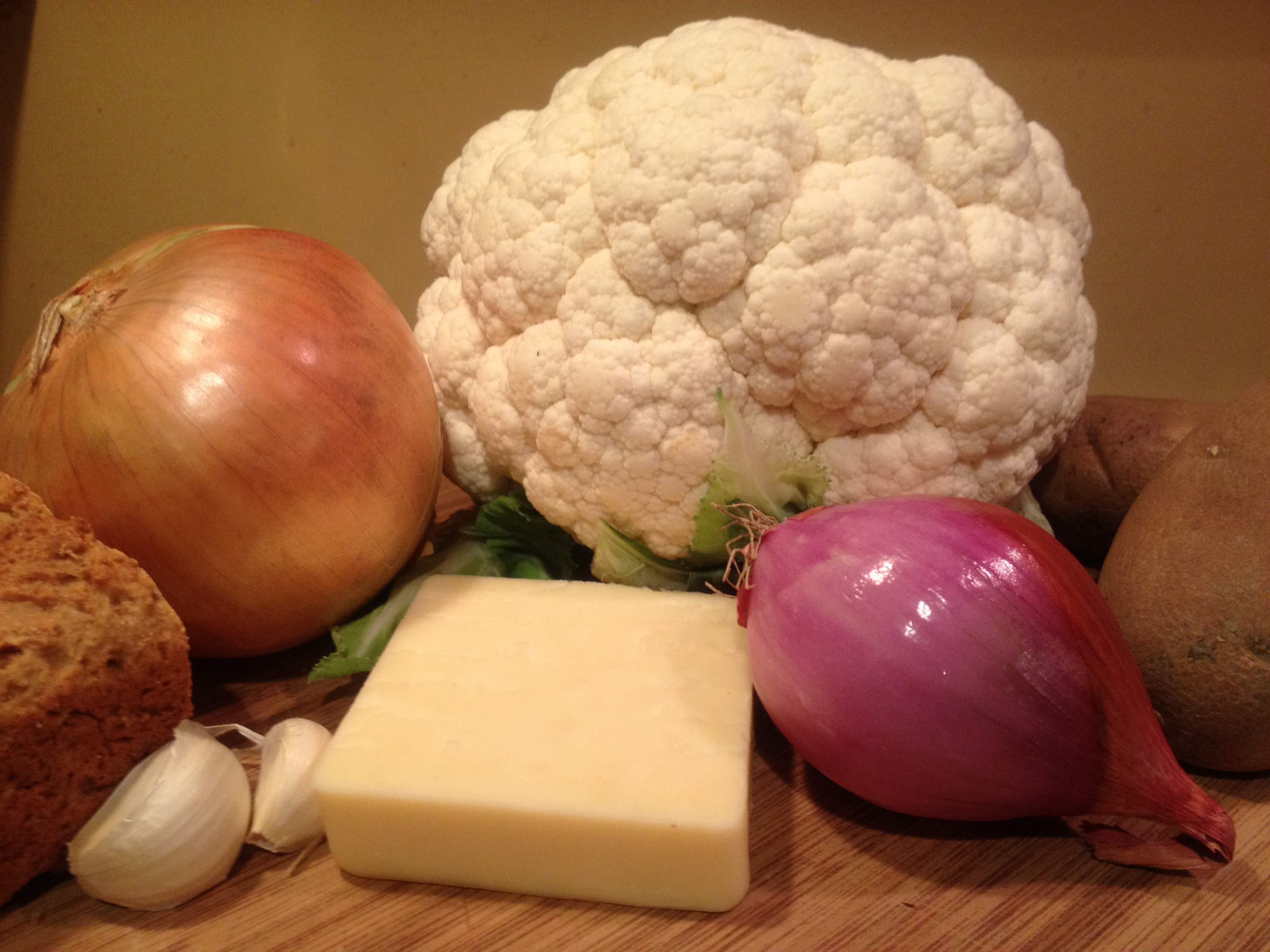
Cauliflower and Cheddar Soup, adapted from Heidi Swanson’s Super Natural Every Day:  Heat a knob of butter in a pan over medium-high heat (don’t burn it).  Add a chopped onion and a couple of chopped shallots with a big pinch of salt and saute until the onion softens.  Stir in a peeled, finely diced potato, cover, and cook for a few more minutes (check and stir your pot, don’t burn it).  Uncover and add 2 minced cloves of garlic and 3 1/2 c. water or stock.  (I was in a hurry so instead of defrosting stock I used boiling water and 1 cube of Rapunzel herb and sea salt bouillon.)  Raise the heat, and once it boils, taste a potato.  When potatoes are tender, stir in a small head of chopped-up cauliflower (or half of a big head) and cook about 5 more minutes until cauliflower is tender as well.  Puree soup, then stir in 1/2 c. grated sharp cheddar cheese and 1-2 Tbsp. dijon mustard.  Taste and adjust flavors with additional salt, cheese, and/or mustard.  Serve garnished with more cheese and butter-toasted croutons (don’t burn them!). I made my croutons from this Whole Wheat Spice Bread with Brown Sugar, Orange Zest, and Walnuts, of course, but if you weren’t able to save any of that I certainly understand.  The croutons in the original recipe look great as well: 3 c. cubed bread bathed in 2 Tb. each melted butter and olive oil, whisked with 1 1/2 Tb. dijon and 1/4 tsp. salt.  Bake 10-15 mins at 350, turning occasionally.

Baked Sweet Potato Fries

End of the weekend.  A sweet one, full of friends, that left the kitchen a disaster.  Everyone’s gone, kids are sleeping, we’re talking in the kitchen.  I’m eating sweet potato fries.  Cold.  Off a cookie sheet.

Casually at first–there are only a few left, it seems easier than putting them away.  I absent-mindedly take another, wonder if we could just clean up next weekend instead. (Is that soon?)  Then I give the tray my full attention to peel up the last sticky, crispy, sugary bits of sweet potato.  No wonder my kids love these.

If your kids don’t get to them first, you’ll be glad to have these roasted sweet potato fries alongside a burger or sandwich of any sort, for an afternoon snack, or topping an untraditional soba or sushi rice bowl.  Or maybe, like me, you’ll find yourself eating them cold from the pan as dessert.

Baked Sweet Potato Fries: Cut sweet potatoes into batons of any size.  Place on a baking sheet and toss with olive oil and salt.  Roast at 450, checking every 10 minutes and turning them as they start to brown.  Remove when edges are crisp; smaller fries may be done before larger ones.  Total baking time depends on how thickly the sweet potatoes are cut.  Serve with ketchup, or maybe a garlicky aioli.

Smoked Salmon Frittata with Spinach and Herbed Cream Cheese

Here in Seattle, when we say “smoked salmon” we aren’t talking about cold-smoked lox-style salmon. Instead it’s hot-smoked, flaky, a bit drier, and by far my preferred style of smoked salmon. Here’s a nice way to feature it for breakfast.

We smoke our own salmon in the backyard in summertime, but it’s available in the store year round. Try to find a piece if you haven’t tried it, because it’s great. But if it’s not readily available and you do have lox, make it easy on yourself, use that. The frittata will be different but still great.

And let’s be honest: the fish adds smoke and salt, but the real star here is the oniony, herbaceous, melting cream cheese. Even if you don’t make this frittata, you might want to keep a little jar of it in the fridge for smearing on your toast. And—this is a lot of talk about NOT making this frittata for a post dedicated to encouraging you to make this frittata, isn’t it?—you can make an even faster dish by simply stirring flaked or chopped smoked salmon and the herbed cream cheese into a pan of nearly-set scrambled eggs.

Smoked Salmon Frittata with Spinach and Herbed Cream Cheese: First make a bowl of herbed cream cheese by mashing some cream cheese with a pinch of salt and a ton of chopped herbs (I used green onions, chives, parsley, dill, oregano, and thyme, probably about 1 c. loosely packed chopped herbs for 4 oz. cream cheese). Set aside. Sauté an onion until translucent and then stir in a few big handfuls of just-washed chopped or baby spinach until the spinach wilts and any moisture evaporates. Meanwhile, beat 6 eggs with salt, pepper, and ¼ c. crème fraiche or plain yogurt. Flake a piece of smoked salmon into the eggs, then add the onion and spinach and mix well. Wipe out the pan you used for the onions, add a little olive oil, and heat the pan over medium heat. Pour in the egg mixture and cook for about 5 minutes, until the edges are set. Dollop herbed cream cheese (as much as you want) on top of the eggs. Move to the oven and bake at 375 for about 10 more minutes, until the eggs are set.

The Best Red Lentil Soup of 2012

It’s no secret around here that I like to cook big when I can.  A big pot of beans, a big pot of soup, a big pot of chili.  Doubling a recipe saves time and isn’t much more work than making a single recipe.  Usually when I double up, I’m feeding a crowd or making one meal for tonight’s dinner and another to freeze for another time.  But then there are occasions when I make a huge pot of something and just eat it twice a day for a week.  This soup is one of those somethings.  It’s that good.

You might think that March 2 is a little early to be declaring anything the “Best of 2012.”  But I’m pretty sure.  I’ve had a go-to red lentil soup recipe for years (it was The Best Red Lentil Soup of 2008 or thereabouts, and has held the title since).  This soup has replaced it with a vengeance.

I knew it would be good, because it was recommended to me by the same friend who gave me that amazing chilaquiles recipe.  She is a great cook and discerning recipe collector, and when she tells me to try something I always do.  This recipe is slightly adapted from 101 Cookbooks, which is another good sign, because I always like Heidi Swanson’s flavorful and sometimes quirky cooking.  In this case her stroke of genius is to add raisins to the soup, which plump up into barely-there bursting bits of sweetness mingled with the curry and coconut flavors.  In case you are feeling cautious to begin with, I will give you the regular-size recipe and you can use your discretion as to doubling it.  (You definitely will next time.)

The Best Red Lentil Soup of 2012: Bring 1 c. red lentils and 1 c. yellow split peas (both picked over and well-rinsed) to a boil in 7 c. water.  Reduce heat to a simmer, add a chopped carrot and 2 tsp. finely minced ginger (I like to grate it with my Microplane), and simmer until split peas are entirely soft, 30-45 minutes.  Meanwhile, heat a gob of coconut oil in a separate pan and saute a bunch of chopped green onions (reserve a handful for garnish) with 2 more Tbsp. minced ginger and 1/3 c. golden raisins.  After two minutes, add 2 Tbsp. Indian curry powder and saute for another minute, stirring constantly, then add 1/3 c. tomato paste and stir for one minute more.  When the lentils and peas are soft, add the tomato-spice mixture to the soup with a can of coconut milk and 2 tsp. salt.  Simmer uncovered for a bit to blend the flavors and thicken the soup; you can adjust the consistency with more water or more cooking.  Serve over cooked brown rice, garnished with those reserved chopped green onions, chopped cilantro, and a dollop of Greek yogurtIf you try this and know of a better red lentil soup recipe, please let me know in the comments.  I never get tired of lentil soup.

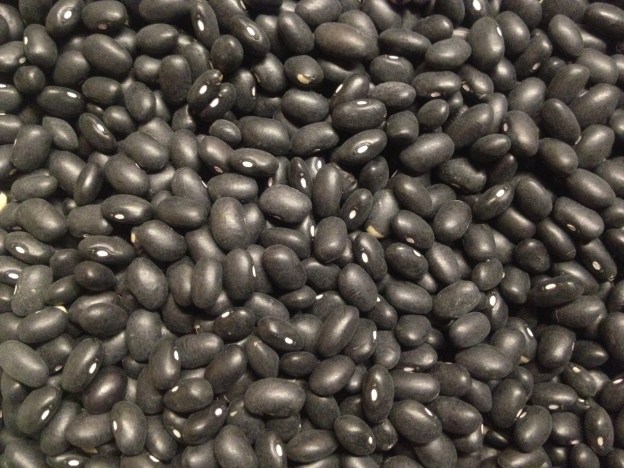
How to Cook Black Beans

Writing about cooking lately has made me reflect on the fact that we think that cooking is harder than it really is.  Take making a pot of beans.  Simple, really.  Beans, water, salt.  That pot will feed you for a long time.  Cooked beans freeze well.  Dried beans cost a fraction of what you pay for canned beans.  Canned foods, including beans, can contain unsafe levels of BPA as well as excessive sodium and preservatives.  And still–still!–it wasn’t until a few years ago that I started using dried beans almost exclusively.  It seemed like too much trouble to cook my own.

So it is with the zeal of a convert that I implore you to set aside a few hours some weekend to cook a pot of beans.  I’m not saying the canned kind are wrong, and I always keep a few cans in my pantry just in case, but there are so many good reasons to cook dried beans yourself.

Once you decide to make the leap, it’s hard to go wrong.  You can soak your beans, or not.  You can salt them as they cook, or wait until the end.  You can use this season’s beans from a crunchy co-op that has amazing dried bean turnover, or cook up the bag that’s been hiding in the back of the cupboard for years.  Despite the vast number of opinions on each of these topics, in my experience you can tune all that out and your beans will turn out just fine.

Ready?  Good.  First, keep an eye on your beans as you take them from the bag or jar to make sure that there are no little rocks mixed in.  Second, measure them out so you have an idea of how much salt to add later.  Finally, give them a good rinse before putting them into your pot.

I like to soak my beans only because it speeds the cooking time on the stove (and thus the actual supervision required).  You can soak your beans covered by a few inches of water overnight, or you can “quick soak” them: put them in a pot, bring it to a full boil for one minute, then turn off the heat and leave your covered pot alone for an hour.  At this point you can drain the beans, or not.  (Some claim that draining the water after an initial soak helps make the beans more digestible.  Others say you’re just pouring valuable nutrients down the drain.  No worries.  Your beans will be great either way.)

So now your black beans (soaked or unsoaked) are in your pot.  Cover the beans with a few inches of water.  (This can be the soaking water if you soaked the beans, or new water.)  Bring the pot to a boil for a few minutes, skimming off any foam that gathers, then reduce the heat to a simmer.  At this point you can leave the beans completely plain, or add any additional flavorings you’d like: some chopped onion, chopped jalapenos, dried epazote, dried oregano, crushed garlic cloves, chopped cilantro stems, whatever.  I usually make my beans rather plain, then add more flavorings later.  Leave the simmering pot partially or fully covered.  Cook for at least half an hour if you soaked the beans, or an hour if you didn’t, then taste a bean.  Once they begin to soften, add about 3/4 tsp. salt per cup of dried beans that you started with.  Continue cooking until beans are completely soft.  This may take two hours or more if you are using unsoaked beans.  (The cooking time will vary according to the beans’ freshness; even soaked beans can take nearly two hours if they are quite old.)  If the water seems to be getting low, add more boiling water.  If there is too much water when the beans are done, pour some off.  Taste the beans as you go.  If they don’t taste great to you, they probably need more salt.  Add a small amount at a time and simmer for a few minutes to let it soak in before tasting again.

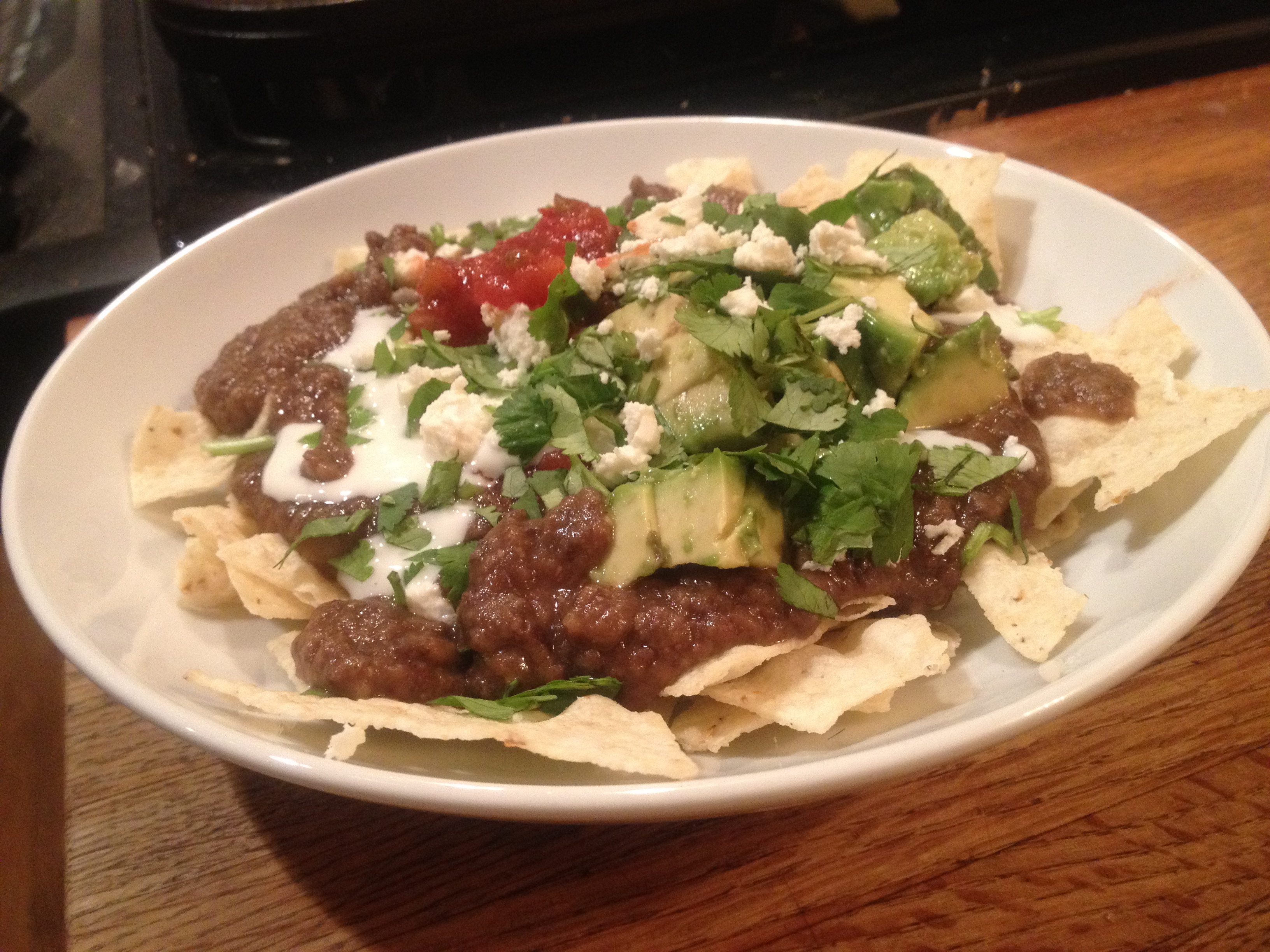
Looking for ideas to use up your delicious pot of black beans?  Mix with rice, top with salsa and it’s dinnertime.  Or click the “Mexican Flavors” link on the sidebar for emmycooks recipes (like maybe these chilaquiles?) that await your black beans with open arms.Some Recipes to Show Off your Black Beans:

Black Beans with Cilantro and Lime
Chilaquiles
Vegetarian Taco Salad
Quinoa Chili with Red Peppers
Enchilada Bake with Black Beans and Tofu
Huevos Rancheros
Winter Wheat Berry Chili
Southwestern Frittata with Peppers, Black Beans, and Cheddar
Black Bean Tacos

My Favorite Recipes: February 2012

It was difficult to choose my favorite recipes from this month! My top five recipes below were all new to me this month, so they are ones that I am newly excited about. But I also cooked several of my old standbys, so make sure you scroll back through this month’s posts to find your own new favorites.Favorite Recipes Collage Feb 2012

Celebrate Spring with A Canning Jar Coddled Egg
Smoky Cauliflower Frittata (or, even simpler: Roasted Cauliflower)
Shaved Brussels Sprout Salad with Lemon, Pecorino and Red Onion
Pasta with Garlic, Anchovies, Chili and Breadcrumbs
Quick Whole Wheat Spice Bread with Brown Sugar, Orange Zest and Walnuts
And last but not least, a readers’ favorite: Eat Your Greens: Easy Handmade Spinach Pasta

Thank you for reading and cooking along with me!  And welcome to the many new readers who have joined us this month.  To receive daily recipe updates, you can subscribe to this blog via RSS or email, or follow @emmycooks on Twitter (links on the sidebar).  And special thanks to The Kitchen’s Garden Project and Cook Every Day for your recognition of emmycooks this month.

And finally, hey, maybe a recipe index would be helpful around here.  If you have created one and have any tips for me, will you please leave me a note in the comments?  Thank you!